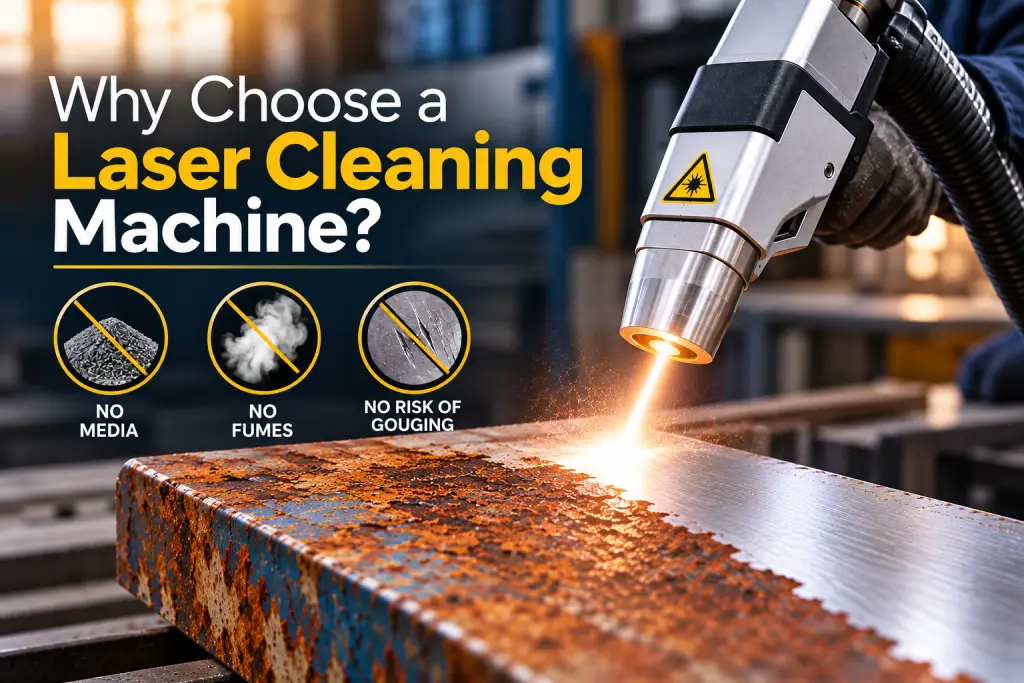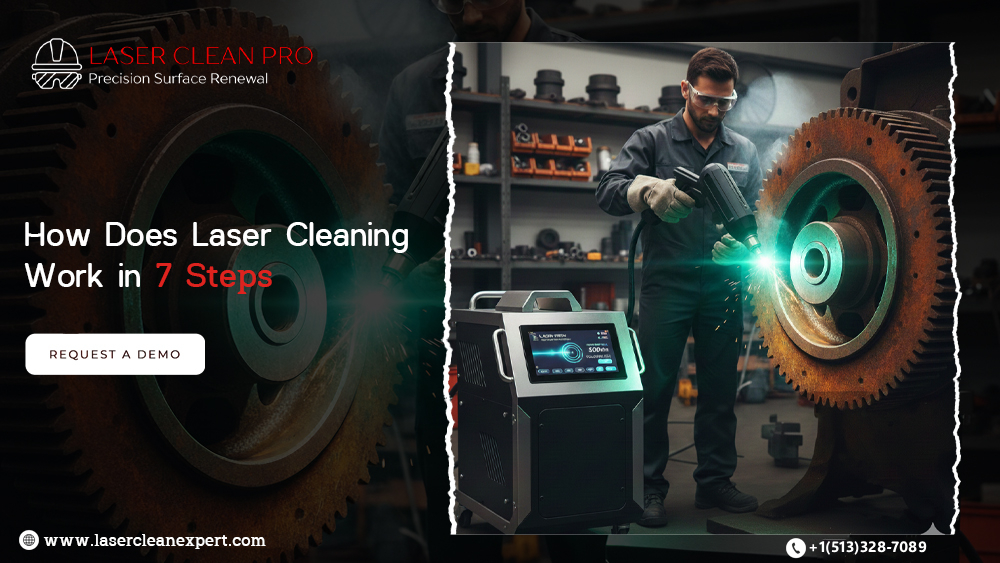
Laser cleaning is done by firing concentrated laser pulses directly at a surface. The energy vaporizes contaminants, rust, paint, grease, and oxides while leaving the base material completely untouched.
It is fast, chemical-free, and used across dozens of industries. Laser cleaning technology works better than most alternatives, with far less mess and risk.
Here's exactly how laser rust removal works, step by step.
It is a type of cleaning technology that uses a high-energy laser beam to vaporize or break down contaminants on the surface through a non-contact process. It's far different from the conventional method.
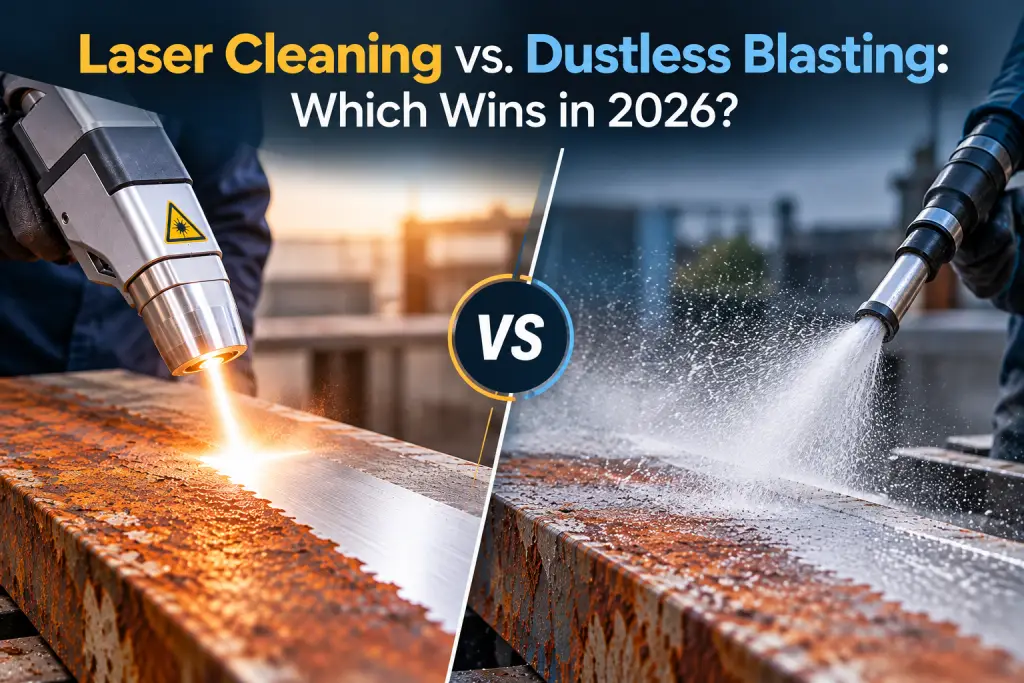
That is, sandblasting strips contaminants but roughens and damages the surface beneath. Chemical solvents come with health risks, disposal costs, and heavy regulatory requirements. Wire brushing is slow, inconsistent, and produces different results depending on who's doing it.
Meanwhile, laser cleaning technology eliminates all of those problems. It's precise, repeatable, and fast enough for commercial use across aerospace, automotive, and heritage restoration industries.
Do laser cleaning machines really work?
Yes, reliably. They're used in high-stakes manufacturing where surface quality is critical, and mistakes aren't acceptable.
Every laser cleaning machine has a fiber laser source that makes a strong beam of light. This beam is made inside the machine. The laser part of the machine gets the photons excited. Sends them through special fibers to make a strong and controlled beam.
The laser cleaning machine can be small or big, depending on what you want to use it for. You can get a 50W machine for light jobs or a very powerful 3000W laser cleaning machine for big industrial work. The person using the machine can make the beam go all the time, for power, or make it go in short bursts for a lot of energy at one time.
In simple terms, if you’re wondering “laser cleaning machine, laser, how does it work?”, it begins with controlled, high‑energy light that can be precisely shaped, timed, and directed onto the surface you want to clean.
This is a precise way of cleaning that does not touch the surface. A machine that uses a laser to remove dirt and other things from the surface works by hitting them with strong and short bursts of laser light. When the laser light hits the surface, something called laser ablation happens.
At a small level, the laser gives a lot of energy in a very short time. The rust on the metal surface is like strong glue. The laser is like a heavy hammer that hits this glue with so much heat and energy that it breaks apart right away.
The dirt does not make a mess. Instead, it turns into gas and tiny dust. Basically disappears into thin air. The laser removing machine is really good at doing this because it uses laser light to remove surface contaminants like rust from the metal surface.
A key reason this works so safely is the ablation threshold. It is like a "breaking point" that is different for every material. Contaminants like paint or rust have a low threshold, while the base metal underneath has a much higher one.
By calibrating the laser to exceed the contaminant's threshold but stay safely below the metal’s, the laser "chooses" to destroy the rust while leaving the underlying surface completely untouched. This is exactly how laser rust removal works
Does laser cleaning remove paint?
With a resounding yes, all without scratching the metal beneath.
The efficiency of a modern laser rust removal machine comes down to how the light is delivered. While some lasers use a continuous wave, top-tier laser cleaning technology relies on a pulsed delivery.
Continuous wave lasers produce a steady, uninterrupted beam, offering high, consistent power for tasks needing sustained energy. A pulsed laser, by contrast, is like a series of rapid, high-velocity sledgehammer blows. It delivers short, intense bursts of energy thousands of times per second that shatter the contaminant instantly.
Because each pulse is so fast, the heat doesn't have time to soak into the base metal. This cold cleaning method provides incredible precision and speed, stripping away layers without warping or damaging the parts underneath.
In this laser cleaning technology, which is also known as pulsed laser ablation, is defined as a technique that removes materials selectively from a surface, leaving the underlying substrate undamaged.
This technology works by exploiting the different ablation thresholds of materials, which is the amount of energy required to vaporize a substance.
Think of it this way: rust, paint, oil, and oxides are weak in the face of a high-intensity beam. Their thresholds are quite low, so they vaporize almost instantly. The steel or aluminum underneath, however, is much tougher and requires far more energy to be affected.
When we calibrate the laser cleaning process, we set the power high enough to destroy the thick layer of dirt, but low enough that it literally bounces off the base metal without leaving a single scratch.
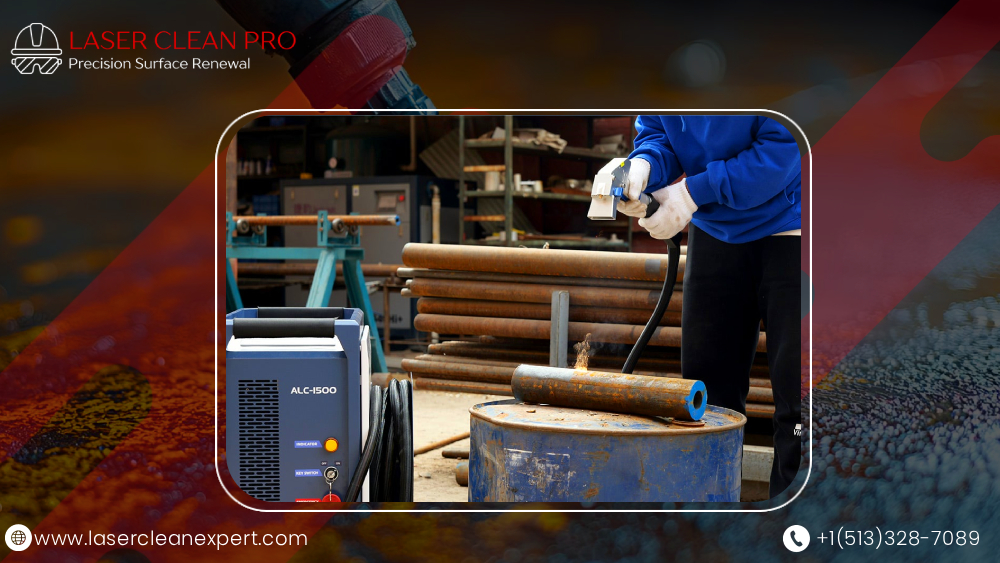
Galvo scanning heads and manual handheld guns move a laser beam across a surface by steering it with mirrors. Galvo systems are. Accurate, whereas handheld guns let you manually clean with flexibility.
In lines, this is often fully automated for perfect consistency. For versatility, a handheld laser cleaning machine lets an operator guide the beam over complex shapes or big structures.
This flexibility is why a portable laser cleaning machine is popular for on-site restoration; whether the setup is robotic or manual, the scanning technology ensures the beam covers every inch of the work area with precision.
When the grime is removed by the laser cleaning technology, the bad stuff on the surface changes in a way. It goes from being a solid to a mix of hot gas, tiny particles, and other stuff that is like a special kind of gas called plasma.
If the laser is really strong, it heats the material so much that it gets way hotter than its boiling point. This makes it turn into a gas or a special kind of gas that has ions in it, which we call plasma.
Here is the thing: not all of the material gets completely turned into gas. Some of it is still thrown out as drops of liquid or, as tiny particles.
This leads naturally to the step of laser removal: why it is important to get rid of the fumes that are made during the laser cleaning process, which is what we call fume extraction.
The sight of rust vanishing into the air is really impressive. When rust disappears, it does not actually go away. The contaminants that are vaporized turn into particles and gases. This is why you need a fume extraction system when you are working with rust.
A good fume extraction system is a part of the process. You cannot do without a high-quality fume extraction system. Whether you are stripping old paint, lead-based coatings, or greasy chemical residues, these airborne particles can be hazardous if inhaled.
What are the disadvantages of laser cleaning?
Laser cleaning, being effective, has significant disadvantages has very high upfront equipment costs and also holds potential for thermal damage on sensitive substrates, and limited effectiveness on highly reflective surfaces or very thick contaminants.
Laser cleaning is an incredibly versatile technology that works on a wide variety of materials, but it is not a one-size-fits-all solution for all materials.
Moreover, laser cleaning has some limitations too:
Highly reflective surfaces like polished copper or mirror-finish metals can reflect the laser, which will reduce efficiency.
Thick contaminants, which are>2mm or multilayered paint, might take too long to remove compared to traditional methods
Heat-sensitive materials like certain thin plastics or very delicate materials may melt or burn, such as thin rubber or fabric.
If you want to upgrade your shop, you will probably be wondering what a laser cleaning machine costs. The thing is, this is an investment with a lot of technology behind it. So the price of a laser cleaning machine can be very different depending on how powerful it is, if you can move it around, and what kind of pulse it has.
Here is what you can really expect to pay for a laser cleaning machine now.
Entry-Level & Hobbyist ($3,000 – $8,000): You can often find a laser cleaning machine through overseas exporters in this range. These are typically lower-power (100W–200W) pulsed units or entry-level continuous wave machines suited for light rust and small parts.
Mid-Range Professional ($10,000 – $25,000): This is the sweet spot for most small-to-medium businesses. These machines offer higher reliability, better cooling, and enough power to handle daily restoration work, paint stripping, and mold cleaning efficiently.
High-Power Industrial ($30,000 – $100,000+): When you move into a laser cleaning machine 3000W or high-energy pulsed systems used in automotive manufacturing or aerospace, the price scales with the technology. These are designed for 24/7 operation and maximum stripping speed.
Can You Make Money With a Laser Cleaning Machine?
Absolutely. Because the operating costs are incredibly low (no chemicals or grit to buy), many owners find they can charge a premium for eco-friendly or non-destructive cleaning services.
Laser cleaning is really good at getting things clean. It works faster. Gives more consistent results than sandblasting, chemical stripping, or wire brushing. This is a deal because it does not hurt the material underneath.
It removes rust, paint, and oxides precisely. It does this without using anything on the material or harsh chemicals. These things can cause a lot of problems. Make a big mess.
Using laser cleaning is an idea because it uses very few supplies, and you can predict how much it will cost to run. This makes it a safer way to clean things. It costs less in the long run. Laser cleaning is a choice over the old ways of cleaning.
Laser cleaning is more than just a high-tech prospect; it’s a smarter, safer, and more efficient way to restore surfaces without the mess of chemicals or abrasives. Whether you're looking to renew a vintage engine block or streamline an industrial production line, laser cleaning will help.
If you’re ready to move beyond traditional scrubbing and grinding, our laser cleaning machines are here to help you find the perfect system for your specific needs. Explore our range of machines today and see how easy professional-grade restoration can be.