.png)
Laser cleaning is a precise way to remove rust, paint, coatings, carbon and other unwanted layers from surfaces. It is used by service businesses, restoration shops and in-house maintenance teams. This guide explains how the machines do the work, when to pick a handheld laser cleaning machine, what affects the laser cleaning machine price, and why laser cleaning is becoming a common alternative to abrasive methods.
At its core, laser cleaning is a form of laser ablation. The laser produces short, high peak power pulses that hit the surface. Energy is absorbed by the contaminant layer. That energy breaks molecular bonds or vaporizes the material, so the contaminant separates from the substrate. The underlying metal or stone usually reflects or does not absorb the same wavelengths, so it stays largely intact when the process is tuned correctly. This selective removal is the fundamental reason laser cleaning can clean without damaging the base material.
Researchers describe three main mechanisms that operate during laser cleaning. Thermal ablation uses rapid heating and vaporization of the contaminant. Thermal stress causes layers to crack and flake off due to rapid temperature change. Plasma and shock effects can eject debris when energy and pulse characteristics are high enough. Different job types and materials will favor one mechanism over the others. That is why machine settings and pulse type matter.
Machine makers tune pulse duration, repetition rate and peak power to match the job. Short
pulses with high peak power are better for precision cleaning where you want to remove only
a thin layer. Longer pulses produce more heat and can be suitable when the contaminant
requires deeper thermal action. Wavelength matters too. Fiber lasers in the infrared are
common for metal cleaning, while other wavelengths may be useful for specific coatings.
Good optics, beam shaping and scanning patterns control the energy delivered per square
centimeter and determine cleaning speed and safety.
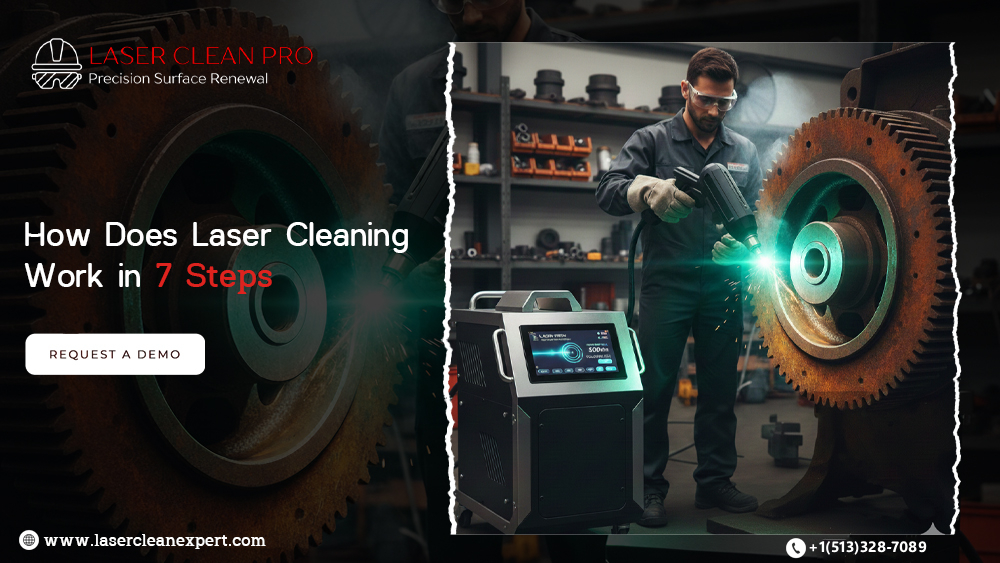
Typical cleaning process in five steps
1. Inspect the surface and choose settings based on material and coating thickness.2. Set pulse power, repetition rate and focal distance.
3. Apply the beam across the work area using a handheld gun, scanner head or trolley
system.
4. Remove or vacuum up loose debris and perform a visual or instrument check.
5. Adjust settings as needed and repeat until the desired finish is reached. This simple
workflow is how operators keep jobs efficient and repeatable.
When to use a handheld laser cleaning machine
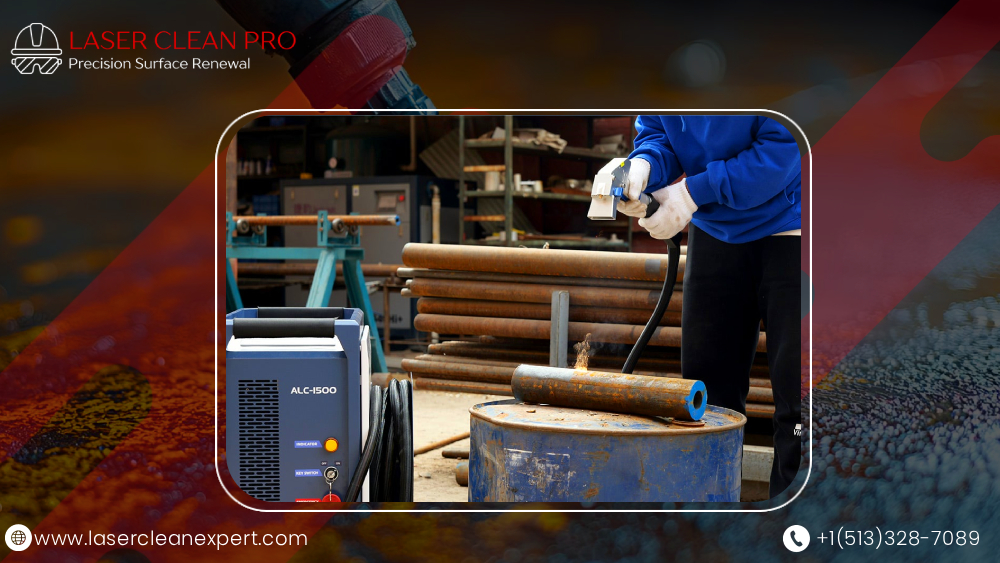
Handheld laser cleaning machines are common where mobility and tight access matter. A
handheld unit lets technicians reach engine bays, brackets, small castings and restoration
spots that larger systems cannot. These units are popular with mobile service providers and
small shops because they are portable and fast to deploy on-site. Manufacturers offer
handheld options across a range of power levels to suit light rust removal through heavier
coating work.
How laser cleaning compares to sandblasting and
chemical stripping
Laser cleaning produces less waste, no blasting media and far lower risk of surface
deformation on thin or delicate parts. It also reduces masking and containment needs for
nearby components. For precision jobs and restoration work, laser cleaning can save time
and lower total cost of ownership. For very large, unrefined surface removal like heavy
concrete spall repair, abrasive methods may still be more economical. Assess the job size,
required finish and downstream disposal costs when choosing the method.
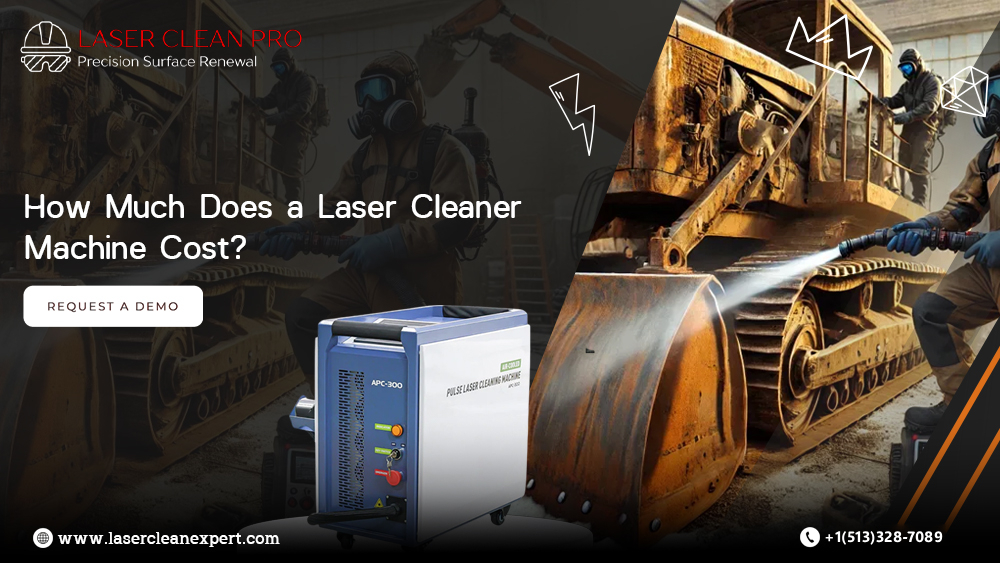
What affects laser cleaning machine price
Price depends on power rating, pulse technology, scanning head quality, cooling systems
and build quality. Entry level handheld systems appear in listings at a few thousand dollars,
while higher power, industrial trolley systems cost significantly more. Market listings show a
broad range because manufacturers sell units tuned for light shop use up to multi kilowatt
installations for heavy industrial work. Financing and service packages also change the
effective purchase cost. If price is a main concern, start by matching the machine power to
the largest job you expect to run and then compare service and training included in the offer.
Practical tips for operators and business owners
● Always test on a hidden area to dial in settings. Small changes in focus and power
can change results.
● Use proper ventilation and capture systems. Even though there is little dust,
vaporized coatings can still require extraction.
● Train operators on pulse control and scan techniques. Good operator technique
increases yield and reduces rework.
● Track cycle times for typical tasks. Knowing how many square feet per hour you can
clean helps calculate true job profitability and return on investment.
Final note on choosing gear
If you run a service business or plan to start one, look for a machine that balances portability
and power for the jobs you expect. A handheld laser cleaning machine is a good starting
point for mobile work and restoration. For larger production or yard work, consider trolley or
gantry systems. Compare quoted laser cleaning machine price with training, support and
documented cleaning rates so you can estimate payback time.