The best laser cleaning machine isn't necessarily the one with the highest power output. It's the one that matches the type of work you do. A machine designed for precision restoration has very different strengths than one built to remove heavy rust from structural steel or clean large industrial components. Before comparing individual models, your typical applications should drive this decision. Businesses use laser cleaning for automotive restoration, weld preparation, expanding an existing service line, or industrial maintenance. And each of those applications points toward a different machine. This guide compares some of the leading laser cleaning machines based on where they perform best, helping you choose equipment that fits your workflow, business goals, and the types of jobs you want to take on.
The right match isn't just about cleaning performance it's about which machine lets you take on higher-margin jobs without adding headcount or downtime.

Each machine serves a different purpose. Rather than looking for a single "best" model, the goal is to find the one that's best suited to your applications, production requirements, and future business growth.
A laser cleaning machine should be evaluated by more than its wattage. Power matters, but it's only one part of the decision. For this comparison, we looked at the type of work each machine is designed to handle, the industries it fits best, overall productivity, portability, and how well it supports day-to-day operations. We also considered the trade-offs buyers should understand before investing, because choosing the right machine often comes down to matching the equipment to your workflow rather than simply buying the most powerful option.
One of the biggest mistakes buyers make is comparing machines before understanding the difference between pulsed and continuous wave (CW) laser cleaners. These two technologies are designed for different applications, and choosing the right one will narrow your options considerably.
A pulse laser cleaning machine delivers energy in short bursts, allowing them to remove rust, paint, oxides, and other contaminants while minimizing heat transfer to the underlying material. This makes them a strong choice for applications where surface quality is just as important as cleaning performance.
You'll typically see this machine in:
Because of their controlled energy delivery, pulsed machines are often chosen by restoration professionals and businesses that work with heat-sensitive materials. They also provide the flexibility needed for contractors offering a variety of cleaning services. The trade-off is cleaning speed. While pulsed systems excel at precision work, they generally aren't the most efficient option for removing heavy corrosion across large industrial surfaces. For a restoration or auto-detailing business, that trade-off is usually worth it. Clients are paying for a finish that protects the part, not just speed.
Continuous wave laser cleaners produce a constant laser beam, making them better suited to applications where productivity is the priority.
You'll typically see this machine in:
For businesses handling large-scale industrial work, a CW machine can reduce cleaning times and improve overall efficiency. That can make a significant difference when labor costs and project turnaround directly affect profitability. However, higher throughput doesn't automatically make a CW machine the better choice. On restoration projects or delicate surfaces, a pulsed system may provide better control and help preserve the underlying material.
If your business focuses on restoration, precision cleaning, or applications where protecting the base material is important, a pulsed laser cleaner is usually the better fit. If you regularly remove heavy corrosion, thick coatings, or contaminants from large industrial components, a continuous wave machine will generally deliver the productivity needed for those applications. Once you've decided on the right laser type, comparing individual machines becomes much more straightforward.
Every business has different cleaning requirements, so the machines below aren't ranked from best to worst. Instead, they're organized by the types of applications they're designed to handle and the businesses they're best suited to support.
If most of your work happens at customer sites, portability becomes just as important as cleaning performance. The LCP 300C is designed with that in mind, making it a practical option for businesses that travel between job sites or want to add laser cleaning as a new service without investing in a larger industrial system. It performs well on restoration work, surface preparation, paint removal, and light-to-moderate rust removal, where precision matters more than maximum throughput. Its compact design also makes transportation and setup easier for mobile operations. If your projects primarily involve heavy industrial corrosion or large structural components, a higher-powered continuous wave machine will usually be a better fit. A strong choice for contractors looking to build or expand a mobile laser cleaning service while maintaining the flexibility to handle a wide range of precision cleaning applications.
Many businesses don't need multiple laser cleaners. They need one machine that can handle a wide variety of jobs consistently. The LCP 300 offers a balanced combination of precision and versatility, making it a good fit for businesses that regularly work across different cleaning applications. It's commonly used for rust removal, oxide cleaning, weld preparation, paint removal, and restoration work where preserving the base material is important. For fabrication shops and restoration businesses, that versatility allows a single machine to handle a broad range of jobs without compromising cleaning quality. While it provides greater flexibility than more specialized systems, businesses focused primarily on large-scale industrial cleaning may find that a continuous wave machine offers better productivity for high-volume work. An excellent option for businesses that need one machine capable of handling a variety of precision cleaning applications without being limited to a single niche.
Some cleaning jobs require the same results over and over again. In production environments, consistency and repeatability are often just as important as cleaning performance. That's where the LCP 300T stands out. This machine is well suited for manufacturers handling repetitive cleaning tasks such as weld preparation, oxide removal, or surface treatment before coating. It integrates more naturally into production workflows than machines intended primarily for mobile field work. For businesses whose work is spread across multiple customer sites, a more portable model may be the better choice. The LCP 300T is designed to support consistent production processes rather than frequent transportation. If your laser cleaning work is part of a manufacturing process rather than a mobile service, the LCP 300T offers the consistency needed for repeatable production applications.
As demand grows, faster cleaning without giving up precision becomes the priority; that's the gap the LCP 500 fills. For businesses with increasing customer demand, that means taking on more work without sacrificing finish quality or investing in a larger industrial system. For businesses handling increasing workloads, this additional productivity can help shorten project timelines and improve overall workflow without moving to a continuous wave system. That said, if most of your work involves thick corrosion on structural steel or large industrial equipment, a continuous wave machine is likely to be the more productive option. A practical choice for businesses that need more throughput than entry-level pulsed machines while continuing to focus on precision cleaning applications.
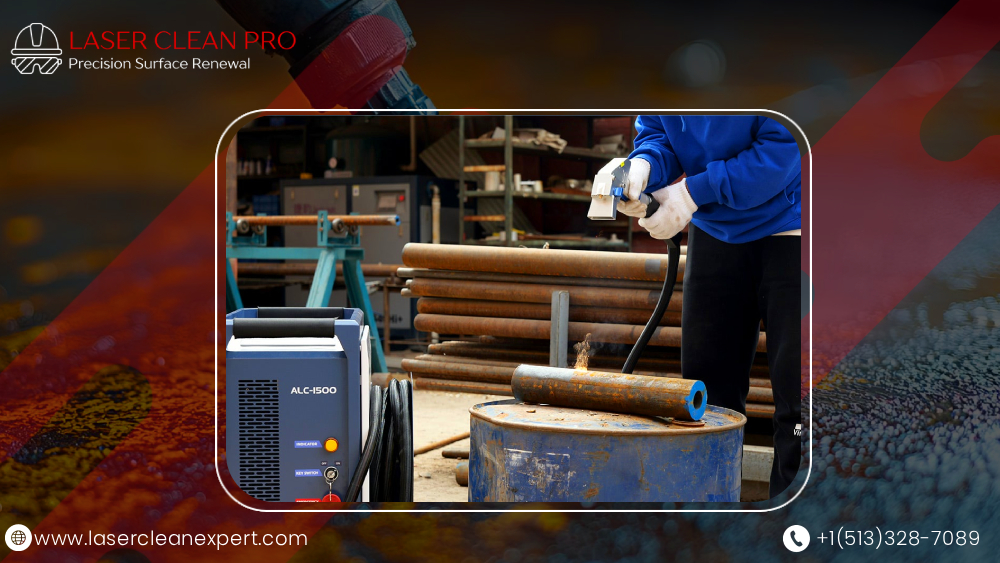
Industrial cleaning is less about precision and more about keeping projects moving efficiently. Heavy corrosion presents a very different challenge from restoration work,and when cleaning structural steel or heavily rusted components, productivity matters as much as cleaning quality. The LCP 1500 is designed for these demanding applications. As a continuous wave laser cleaner, it delivers the throughput needed to remove heavy rust and coatings more efficiently across larger surfaces. It's commonly suited to fabrication shops, industrial maintenance contractors, equipment refurbishment businesses, and companies replacing traditional abrasive cleaning methods with laser technology. While it excels in industrial environments, it isn't intended for delicate restoration work where preserving the underlying surface is the primary goal. If your business regularly tackles heavy industrial cleaning projects, the LCP 1500 provides the speed and efficiency needed to improve workflow and reduce labor-intensive cleaning methods.
Businesses handling larger industrial workloads often need equipment capable of maintaining productivity across demanding projects. The LCP 2000 is designed for businesses that already have a steady flow of industrial work. Instead of expanding your services, it helps increase throughput, shorten project timelines, and keep larger contracts moving on schedule. Its higher output makes it well suited to cleaning large fabricated components, industrial machinery, heavy equipment, and production environments where reducing downtime is a priority. Rather than expanding the types of jobs you can perform, a machine in this class helps complete existing work more efficiently. For businesses managing multiple large projects, that increase in throughput can improve scheduling and overall operational efficiency. Smaller restoration businesses or contractors focusing on precision work may not benefit from this level of power. The LCP 2000 is a strong fit for industrial operations that prioritize faster cleaning speeds and higher productivity across large-scale applications.
When cleaning speed is the highest priority, the LCP 3000 is designed to handle demanding industrial applications where large surface areas need to be processed efficiently. It's commonly suited to industries such as heavy manufacturing, shipbuilding, infrastructure maintenance, and large fabrication facilities where reducing cleaning time can significantly improve project turnaround. Because of its capabilities, this machine is generally intended for businesses with consistent industrial workloads rather than contractors handling occasional restoration projects. Choosing the highest-powered machine isn't always the right decision. For many businesses, selecting equipment that matches the work they perform every day provides a better long-term return than investing in power they rarely use. For businesses handling high-volume industrial cleaning on a regular basis, the LCP 3000 offers the productivity needed for demanding applications.
Instead of asking which machine is the "best," it's more useful to ask which one is best for the type of work you do.
Rust removal covers a wide range of applications, from lightly oxidized automotive parts to heavily corroded industrial equipment. For heavy rust on structural steel, machinery, and industrial components, continuous wave machines such as the LCP 1500, LCP 2000, and LCP 3000 are generally the better choice because they provide higher cleaning speeds across larger surfaces. For lighter rust on sensitive parts, a pulsed system such as the LCP 300 or LCP 500 offers greater control while helping preserve the underlying material.
Metal cleaning often includes weld preparation, oxide removal, paint removal, and surface preparation before coating. For precision work, pulsed machines remain the preferred option because they provide controlled cleaning with minimal impact on the base material. Businesses handling heavier industrial fabrication or maintenance may benefit more from continuous wave systems when cleaning speed becomes the primary consideration.
For contractors providing on-site services, portability can be just as important as cleaning performance. Businesses that regularly travel to customer sites for restoration and maintenance work will find the LCP 300C especially practical. Its compact design makes it easier to transport while providing the flexibility needed for a wide range of field applications. Its versatility allows contractors to expand their services without investing in equipment intended primarily for fixed industrial environments.
Restoration projects require precision rather than maximum power. Automotive components, historical restoration, molds, or delicate metal surfaces- pulsed machines all call for the same thing: control. Machines such as the LCP 300 and LCP 500 provide the level of control needed to remove contaminants while helping preserve the underlying material.
The cost of a laser cleaning machine depends on more than just power output. The right investment comes down to the type of work you plan to do and the features that support your business. One of the biggest factors is laser type. Pulsed systems are typically chosen for precision applications such as restoration, paint removal, and weld cleaning, while continuous wave machines are better suited to heavy industrial cleaning where productivity is the priority. Power output also influences the investment. Higher-powered machines generally clean larger surfaces more quickly, making them a practical choice for businesses with demanding industrial workloads. Other factors include the cooling system, software capabilities, ease of operation, training, and after-sales support. These features can have a significant impact on long-term productivity and the overall ownership experience. If you're still evaluating whether purchasing is the right step, renting a laser cleaning machine can be a practical way to gain hands-on experience before making a long-term investment.
If you're searching for a laser cleaning machine for sale, you'll typically have three purchasing options. Buying directly from the manufacturer is often the best choice for businesses looking for application guidance, product training, and ongoing technical support. It also gives you access to equipment recommendations based on your specific cleaning requirements rather than a one-size-fits-all solution. Working with an authorized distributor can be a good option if local service and support are important. Many distributors provide installation assistance, operator training, and warranty support that can help businesses get started more quickly. Online marketplaces may offer entry-level machines, but buyers should carefully evaluate what's included. Before purchasing, confirm the warranty, service availability, training resources, and technical support. A lower purchase price doesn't always translate into a lower cost of ownership if support is limited.
If you're not expanding an existing business but building a new one, the decision looks a little different. Entrepreneurs entering laser cleaning for the first time usually prioritize low operating costs, a small equipment footprint, and the ability to offer mobile service from day one. A pulsed machine like the LCP 300C is often a practical starting point that keeps the initial investment manageable while opening the door to restoration, detailing, and light industrial work as the business grows.
There isn't a single best machine for every rust removal job. Continuous wave machines are generally better suited to heavy corrosion on industrial equipment and structural steel, while pulsed machines provide greater precision for lighter rust removal on sensitive components.
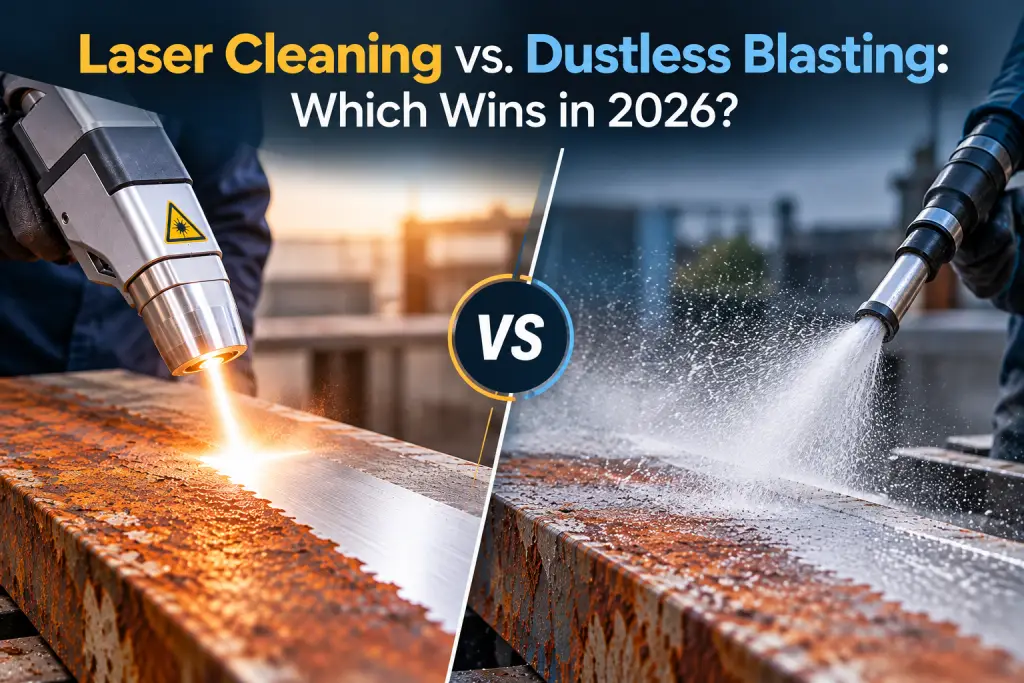
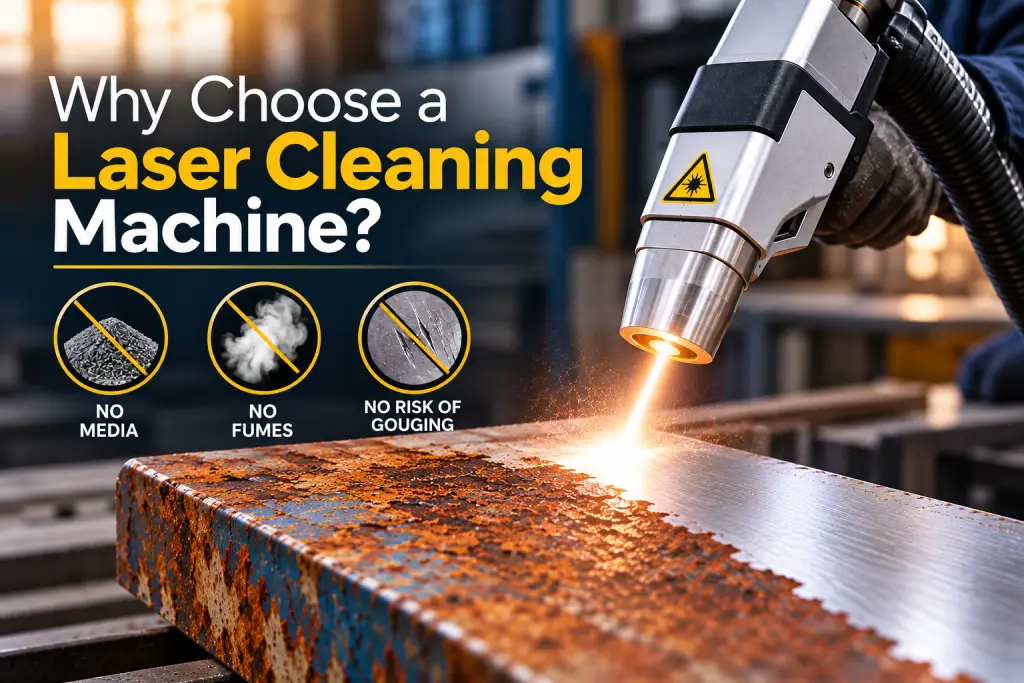
Yes. Laser cleaning is widely used across manufacturing, automotive restoration, industrial maintenance, and fabrication because it removes rust, paint, oxides, and other contaminants without relying on abrasive media or harsh chemicals. The key is choosing the right laser type for the application.
Start with the work you do most often. If your projects involve restoration, precision cleaning, or heat-sensitive materials, a pulsed system is usually the better choice. For heavy industrial cleaning and large surface areas, a continuous wave machine typically offers higher productivity.
While some machines are more versatile than others, no single model is ideal for every job. Matching the machine to your most common applications will generally provide better performance and a stronger return on investment than simply choosing the highest-powered option.
The best laser cleaning machine is the one that supports the way your business operates. If your work focuses on restoration, automotive applications, or precision surface preparation, a pulsed laser cleaner offers the control needed to clean delicate surfaces effectively. If you're removing heavy rust from industrial equipment or structural steel, a continuous wave machine is likely to deliver the productivity your projects demand. Rather than comparing machines by power alone, consider the types of jobs you complete every day, the industries you serve, and how laser cleaning fits into your long-term business goals. If you're still weighing which machine fits your work, talk to an expert who can walk through your specific applications and recommend the right fit.