Metal surfaces are constantly exposed to rust, oxidation, paint buildup, oil residue, and industrial contaminants. Traditional cleaning methods can remove those materials, but they often come with tradeoffs such as surface damage, abrasive waste, chemical handling, and lengthy cleanup.
Laser cleaning takes a different approach.
Instead of grinding, blasting, or stripping the surface, a laser cleaning system targets the contamination itself. The process is precise, repeatable, and non-contact, making it suitable for everything from delicate components to large industrial equipment.
Whether you're adding laser cleaning to a service business or improving in-house maintenance operations, a laser metal cleaning machine provides a modern solution for surface preparation and restoration.
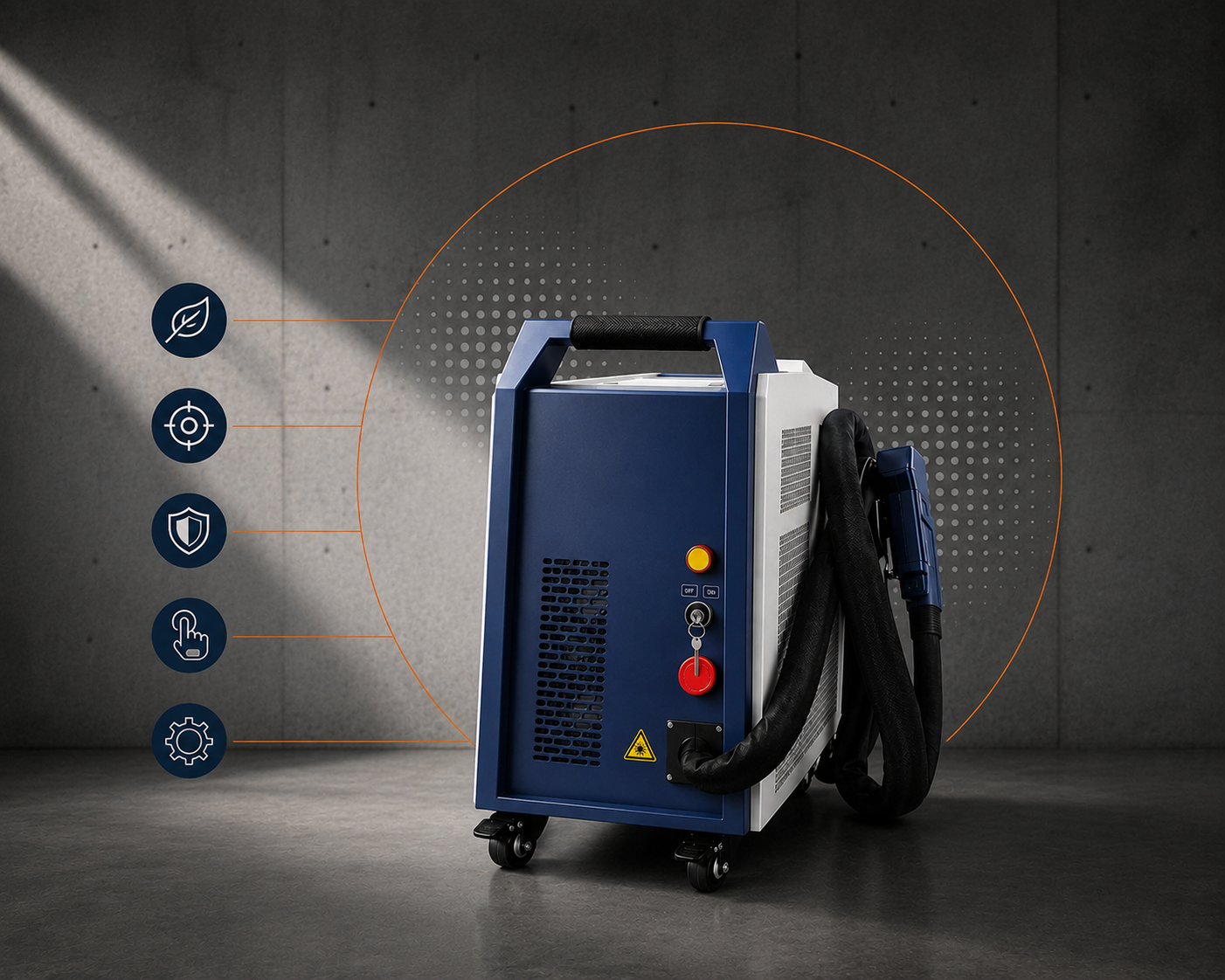
A laser cleaning machine uses concentrated laser energy to remove unwanted materials from metal surfaces.
Rust, paint, oxidation, oil, coatings, and contaminants absorb laser energy differently than the metal underneath. When the laser reaches the surface, the contamination breaks apart while the base material remains largely unaffected when the machine is configured correctly.
Unlike sandblasting or chemical stripping, the process does not rely on abrasives or solvents.
A professional laser metal cleaning machine can be used for:
A modern metal laser cleaning machine allows operators to clean surfaces while preserving the integrity of the underlying material.
Laser cleaning works through a process called laser ablation.
The laser beam is directed toward the contaminated surface. Rust, paint, and coatings absorb the laser energy and break apart. The metal beneath reflects much of that energy, allowing operators to remove contamination without aggressive abrasion.
This process gives users precise control over cleaning depth and surface quality.
A galvanometric scanner controls the movement of the laser beam across the surface.
Rather than concentrating energy on a single point, the scanner distributes the beam in a controlled pattern. This allows the machine to clean:
The scanner plays a major role in cleaning speed, consistency, and coverage.
Cooling systems help maintain stable laser performance during operation.
Air-cooled machines are typically:
These systems are often used by service providers and businesses that need mobility.
Water-cooled systems are designed for:
These systems help maintain performance during demanding cleaning applications.
The right cooling system depends on workload, runtime requirements, and machine power.
Laser cleaning continues to gain attention because it addresses many of the challenges associated with traditional surface preparation methods.
Laser cleaning removes the need for:
This reduces waste while simplifying cleanup.
Traditional cleaning methods often involve recurring expenses such as:
A metal laser cleaning machine helps reduce many of these ongoing costs while providing a reusable cleaning solution.
Unlike grinding and blasting, laser cleaning operates without physically contacting the surface.
This helps:
For many businesses, this creates a cleaner and more efficient working environment.
Laser cleaning is suitable for a wide range of metal surfaces.
Common materials include:
A professional laser metal cleaning machine can remove:
The effectiveness depends on material type, coating thickness, and the condition of the surface.
Laser cleaning technology is now used across many industries where surface quality and precision matter.
Remove oxidation and contaminants from sensitive components without affecting dimensional accuracy.
Prepare surfaces for welding, coating, and restoration work.
Clean equipment, turbines, and critical infrastructure components.
Remove contaminants from components without aggressive abrasion.
Support maintenance and equipment refurbishment while minimizing contamination risks.
A metal laser cleaning machine provides the flexibility needed across these demanding industries.
Power selection should be based on application requirements rather than simply choosing the highest wattage available.
Lower-power systems are commonly used for:
These machines provide greater control and are often easier to transport.
Larger industrial applications often require higher throughput.
These systems are commonly used for:
A laser metal cleaning machine should match your workload, productivity goals, and operating environment. For heavy industrial jobs like structural steel or large-scale rust removal, the LCP 3000 constant wave laser delivers the output to keep up.
Investment levels vary depending on machine configuration and intended use.
Several factors influence machine pricing:
When evaluating a laser metal cleaning machine, it is important to focus on long-term value rather than simply comparing specifications.
The right machine should improve productivity while supporting your business goals.
Laser cleaning is highly effective, but it is not the perfect solution for every application.
Certain situations may require alternative approaches.
Examples include:
Understanding these limitations helps ensure realistic expectations and better equipment selection.
The machine itself is only part of the decision.
Support, training, and long-term reliability often determine the success of a laser cleaning program.
Our team provides support before and after the sale.
We help customers:
Every metal laser cleaning machine requires proper operator training.
We provide guidance on:
The goal is to help customers become productive as quickly as possible.
Laser cleaning should be viewed as a long-term investment rather than a simple equipment purchase.
Compared with recurring spending on:
ownership often delivers significant operational benefits.
Financing options can help businesses spread acquisition costs while beginning to realize productivity gains immediately.
When evaluating total ownership costs, consider:
Looking beyond the purchase price often provides a clearer picture of long-term value.
Laser cleaning systems require proper safety procedures and operator training.
Important considerations include:
A safe operating environment protects operators, equipment, and productivity.
Following established safety standards is essential for successful implementation.
Whether you're adding laser cleaning to an existing operation or evaluating equipment for the first time, choosing the right machine starts with understanding your goals.
Our team can help you compare options, evaluate applications, and identify the best solution for your workload.
If you're looking for a laser metal cleaning machine, we're ready to help.