Instead of physically attacking the surface, laser systems use concentrated energy to remove rust, oxidation, paint, and contaminants with precision. The result is a cleaner process, greater control, and less impact on the base material.
Whether you're building a laser cleaning business or looking for equipment for in-house maintenance, the right system can improve productivity while reducing ongoing operating costs.
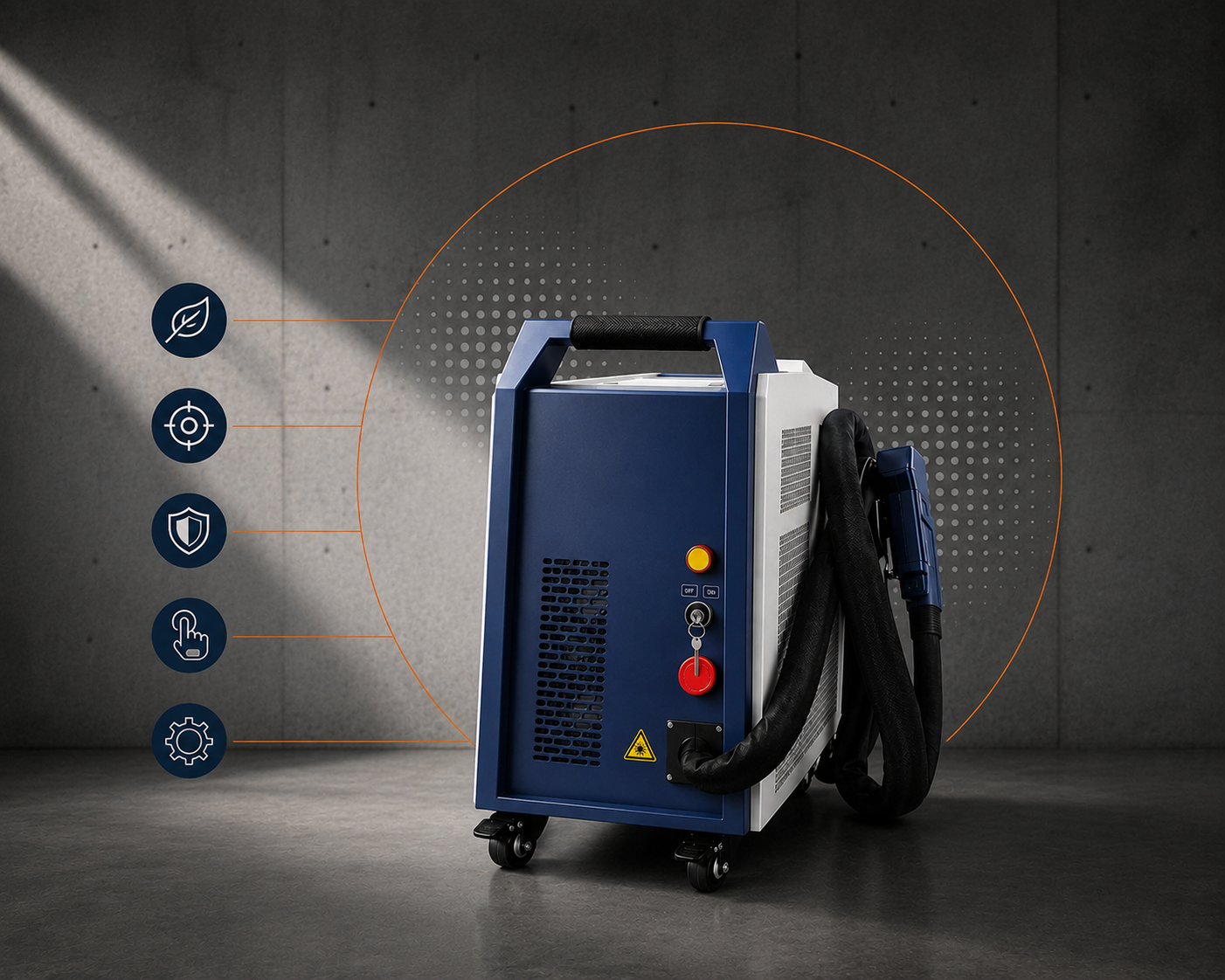
Laser rust removal is a non-contact cleaning process that uses laser energy to remove corrosion from metal surfaces.
When the laser beam reaches the rust layer, the corrosion absorbs the energy and breaks apart. The underlying metal reflects much of that energy, allowing operators to clean the surface without aggressively removing healthy material.
A hand held laser rust remover gives operators the flexibility to clean equipment, structural steel, fabrication projects, and industrial components directly on-site. If you'd rather see this process on your own parts before buying a machine, our laser cleaning services let you test the results firsthand.
Because the process does not rely on blasting media or chemical treatments, cleanup is often simpler and easier to manage.
Laser cleaning may look simple in a demonstration video, but the technology behind it is highly controlled. The goal is not to remove metal. The goal is to remove contamination while preserving the surface underneath.
Every material has what is known as an ablation threshold.
Rust requires less energy to break apart than the metal beneath it. By adjusting power, speed, and beam settings, operators can target corrosion while minimizing impact on the base material.
This selective removal is one of the reasons laser cleaning has gained traction across manufacturing, restoration, and maintenance industries.
Different cleaning applications call for different beam characteristics. Single-mode beams give a concentrated, highly focused output, so operators get maximum control on detail work. A machine like the LCP 300 pulse laser puts that single-mode precision to work on smaller parts and tight spaces. Multi-mode beams spread energy across a wider area instead, which speeds up coverage on bigger surfaces and industrial jobs. The best laser rust cleaner isn't the most powerful one on paper. It's the one that matches the work you do most often.
Laser cleaning continues to gain popularity because it solves problems that traditional methods struggle to address.
There is no blasting media to purchase, store, or dispose of.
There are no chemical strippers to handle.
The process removes corrosion using light rather than abrasive materials.
Laser cleaning eliminates many of the hazards associated with chemical stripping and abrasive blasting.
Operators still need proper PPE and safety procedures, but they avoid exposure to many of the materials commonly used in traditional cleaning processes.
See Machine Options
Traditional cleaning methods often involve recurring expenses.
These may include:
A portable laser rust removal machine reduces many of those ongoing costs while providing a reusable cleaning solution.
Choosing a cleaning method involves more than comparing cleaning speed. Surface quality, operating costs, cleanup requirements, and labor all play a role.
Laser cleaning technology is used across a wide range of applications.
Common examples include:
A quality laser rust removal machine can handle both small components and large industrial surfaces depending on power level and configuration.
Blasting removes rust effectively, but it also removes material from the surface itself.
This can be problematic when cleaning precision parts, thin materials, or valuable components.
A hand held rust removal laser targets corrosion without physically striking the surface.
Chemical treatments can remove rust and coatings, but they introduce handling requirements, disposal concerns, and environmental considerations.
Laser cleaning eliminates the need for many of those chemicals while reducing cleanup time.
Dry-ice blasting can be effective for certain cleaning applications, but it often lacks the precision needed for detailed rust removal.
A rust stripping laser allows operators to focus cleaning energy exactly where it is needed.
Laser cleaning is no longer limited to specialty applications.
Industries using this technology include:
Remove rust from frames, panels, and restoration projects.
Clean precision components while preserving material integrity.
Prepare surfaces before welding, coating, or assembly.
Remove corrosion from vessels, equipment, and structural components.
Preserve valuable materials during refurbishment projects.
A professional laser rust cleaning machine provides the versatility required across these industries.
Rust is only one part of the equation.
Many operators use laser systems for:
A modern metal rust removal oxide painting coating removal laser cleaning machine can often perform multiple tasks using the same platform.
That flexibility helps businesses expand services without investing in multiple cleaning technologies.
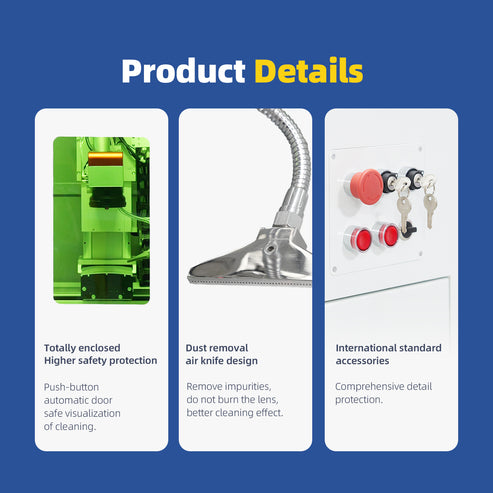
Buying a machine starts with understanding your workload.
Laser cleaning systems are available in a variety of power levels.
Lower-power systems are often used for:
Higher-power systems are commonly selected for:
If you're looking for a laser rust removal machine for sale, consider how often the machine will be used and the type of projects you expect to handle.
A portable laser rust removal machine offers flexibility for mobile operators and service businesses that work across multiple locations.
Pricing varies based on laser type, power output, portability, cooling systems, and support options.
Rather than focusing on a single number, it helps to understand what drives the investment.
Several factors influence the overall investment:
When evaluating portable laser rust removal machine price, it is important to consider long-term value rather than upfront cost alone.
The same applies to overall rust removal laser cost calculations.
A machine that improves productivity and reduces consumables often delivers value long after the initial purchase.
Get Your Custom Quote
Laser cleaning is highly effective, but no technology is perfect.
Certain situations may require alternative approaches.
Examples include:
Understanding these limitations helps ensure the right solution is selected for the job.
Buying equipment is only part of the process.
Support, training, and long-term reliability matter just as much.
Our team provides ongoing support before and after the sale.
We help customers evaluate applications, select equipment, and troubleshoot operational questions.
Every hand held laser rust remover requires proper training.
We help operators understand:
The goal is simple: help customers become productive as quickly as possible.
For many businesses, laser cleaning is not simply an equipment purchase.
It is an investment in operational efficiency.
Compared with recurring spending on blasting media, chemicals, and outsourced cleaning services, ownership can offer significant long-term advantages.
Financing options can also help spread acquisition costs while allowing businesses to begin generating revenue immediately.
When evaluating total ownership costs, consider:
Looking at the complete picture often provides a more accurate view of rust removal laser cost than focusing on the purchase price alone.
Laser cleaning systems require proper safety procedures and operator training.
Important considerations include:
A safe operating environment protects both personnel and equipment while supporting long-term productivity.
Whether you're expanding an existing service business or exploring laser cleaning for the first time, choosing the right equipment starts with understanding your goals.
Our team can help you evaluate applications, compare power options, and determine which machine fits your workload.
If you're searching for a laser rust removal machine for sale, we're here to help.