Removing paint, stain, varnish, and contaminants from wood has traditionally meant sanding, scraping, or chemical stripping. While those methods can work, they often create dust, require extensive cleanup, and may damage delicate surfaces.
Laser cleaning offers a different approach.
A laser cleaning machine for wood removes coatings using concentrated laser energy rather than abrasive contact. The process allows operators to clean wood surfaces while preserving grain patterns, carved details, and original craftsmanship.
Whether you're restoring furniture, renovating architectural woodwork, or operating a commercial restoration business, laser technology provides a precise and controlled cleaning solution.
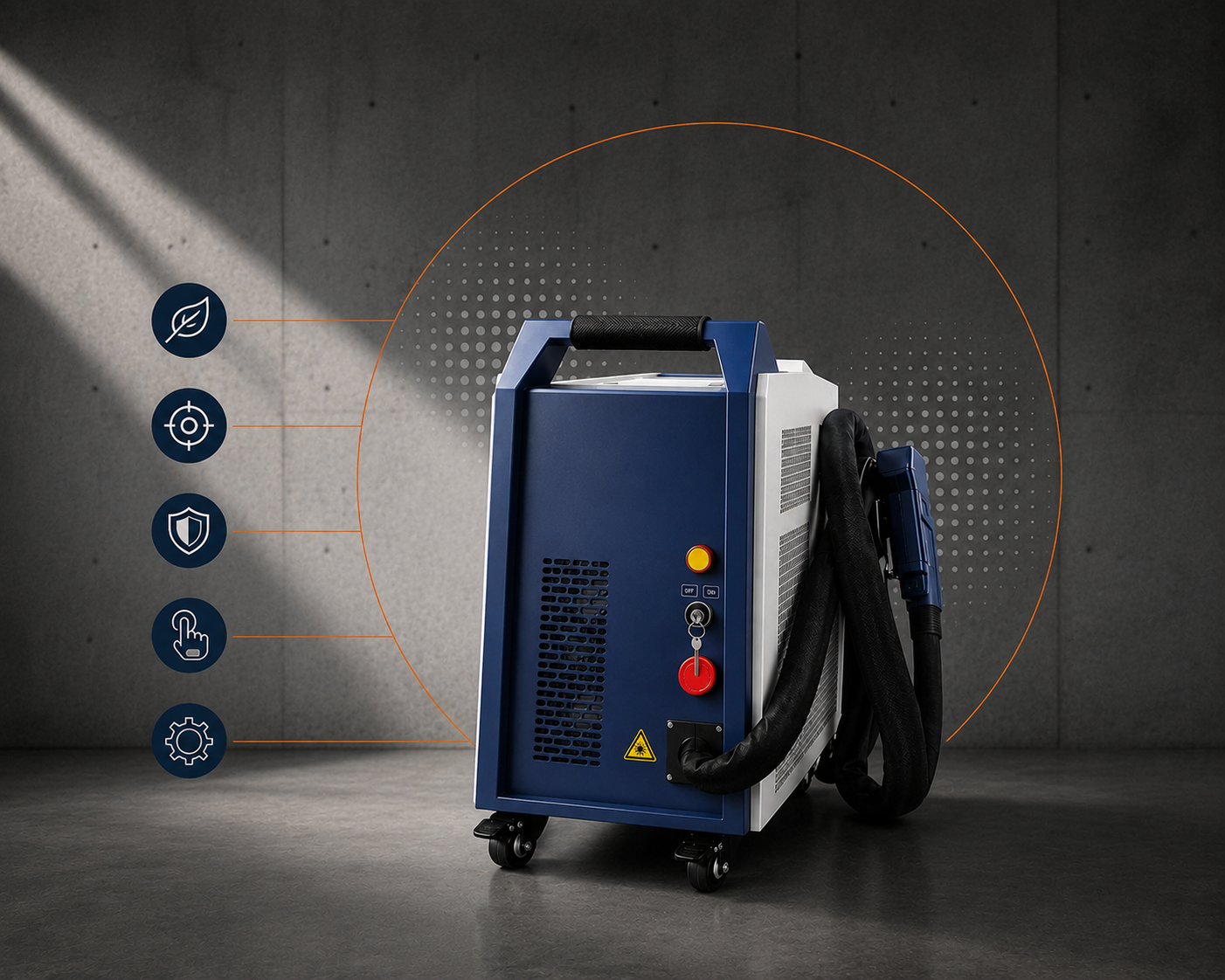
Wood laser cleaning is a non-contact process that removes paint, stain, varnish, dirt, mold, and other surface contaminants using laser energy.
Unlike sanding, the process does not grind away the surface. Unlike chemical stripping, it does not rely on solvents or harsh cleaning agents.
Instead, the laser targets the coating itself.
As the coating absorbs laser energy, it breaks apart and is removed from the surface. The wood underneath remains largely unaffected when the machine is configured correctly.
This approach makes a laser cleaning machine for wood particularly useful for projects where preserving the original material matters.
A professional laser wood cleaning machine gives operators greater control over cleaning depth, speed, and surface preservation than many traditional methods.
Wood coatings vary significantly in thickness, composition, and adhesion. Laser cleaning works by targeting those coatings while minimizing impact on the wood itself.
The process relies on laser ablation.
When the laser beam reaches the coating, the material absorbs energy and begins to break down. Paint, stain, varnish, and contaminants absorb that energy more readily than the wood underneath.
As a result, the coating can be removed while preserving the grain structure below.
A wood stain removal laser machine is particularly effective when operators need precision and control during restoration work.
This is one reason laser technology is increasingly used on antiques, decorative woodwork, and architectural restoration projects.
Pulsed and Continuous Wave lasers serve different purposes.
Pulsed systems deliver energy in short bursts. This gives operators greater control and reduces heat buildup on delicate surfaces.
Continuous Wave systems deliver a constant stream of energy and are often used when cleaning larger areas where productivity is the primary goal.
For detailed wood restoration, pulsed systems are often the preferred option because they offer greater precision. A machine like the LCP 300 pulse laser delivers that short-burst control on antiques, trim, and other delicate surfaces.
Laser cleaning continues to gain attention because it solves several challenges associated with traditional paint removal methods.
One of the biggest concerns during restoration is preserving the surface underneath the coating.
Sanding removes paint, but it also removes wood.
A laser paint stripping machine wood application allows operators to remove coatings without physically contacting the surface, helping preserve details that may be lost through abrasive methods.
Chemical stripping products require handling, storage, and disposal.
Laser cleaning eliminates the need for many of those chemicals.
The process creates less waste and reduces the environmental impact associated with traditional stripping methods.
Traditional methods often require recurring purchases of:
Laser systems reduce many of these ongoing expenses while providing a reusable cleaning solution.
Laser cleaning can remove a wide range of surface contaminants.
Common applications include:
A professional laser cleaning machine wood setup can often handle multiple cleaning applications using the same system.
The effectiveness depends on factors such as coating thickness, material composition, and the condition of the surface.
Laser cleaning is highly effective, but no technology works perfectly on every coating.
Certain materials can present challenges, including:
Epoxy coatings
Polyurethane finishes
Powder coatings
Two-component paints
High-gloss UV-cured finishes
These coatings often have stronger adhesion characteristics or reflect laser energy differently than conventional paints.
Removal is still possible in many situations, but it may require additional passes, slower processing speeds, or specialized machine settings.
Understanding these limitations helps set realistic expectations and ensures the right solution is selected.
Laser cleaning technology is used across a wide variety of wood restoration and maintenance projects.
Common applications include:
A versatile laser wood cleaning machine allows operators to work on everything from decorative trim to large architectural surfaces.
The ability to clean intricate details without physical abrasion is one of the reasons laser systems continue to gain popularity in restoration industries.
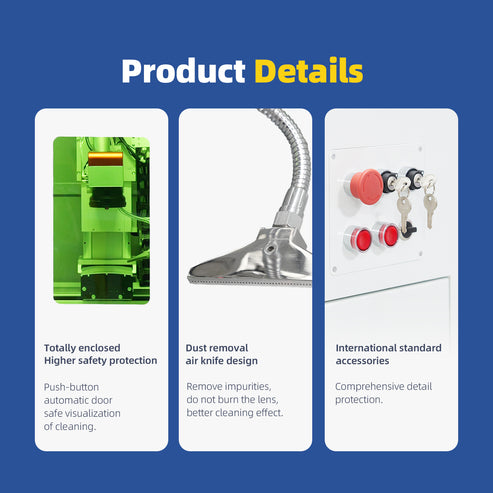
Pricing depends on machine type, power level, portability, and customization requirements.
Rather than focusing on a single number, it is often more useful to understand the factors that influence overall investment.
Several factors contribute to the overall purchase price:
The final laser wood cleaning machine price depends on how the system will be used and the level of productivity required. You can see how pricing is structured before requesting a custom recommendation.
Power selection should be based on the type of work you perform rather than simply choosing the highest wattage available.
Lower-power systems are often suitable for:
These applications benefit from precision and controlled material removal.
Larger projects often require greater throughput.
Higher-power systems are commonly used for:
A laser paint stripping machine wood solution should match your workload, cleaning requirements, and production goals.
The machine itself is only part of the purchase decision.
Training, support, and long-term reliability matter just as much.
Our team provides ongoing assistance before and after the sale.
We help customers:
A professional laser wood cleaning machine delivers the best results when operators understand how to use it properly.
We provide guidance on:
Our goal is to help customers become productive as quickly as possible.
Restoration professionals continue adopting laser cleaning because it allows them to preserve surfaces that would otherwise be difficult to restore.
Applications include:
In many cases, laser cleaning reduces labor while improving surface quality and preserving original craftsmanship.
Those benefits often create measurable value for restoration businesses and property owners alike.
Laser systems require proper safety procedures and operator training.
Important considerations include:
Proper training helps operators achieve consistent cleaning results while maintaining a safe work environment.
Compliance with local workplace regulations should always be part of any implementation plan.
Whether you're restoring antique furniture, cleaning architectural woodwork, or expanding a restoration business, the right equipment can make a significant difference in productivity and results.
Our team can help you evaluate your application, compare machine options, and identify the best system for your workload.
If you're looking for a laser cleaning machine for wood, we're ready to help.