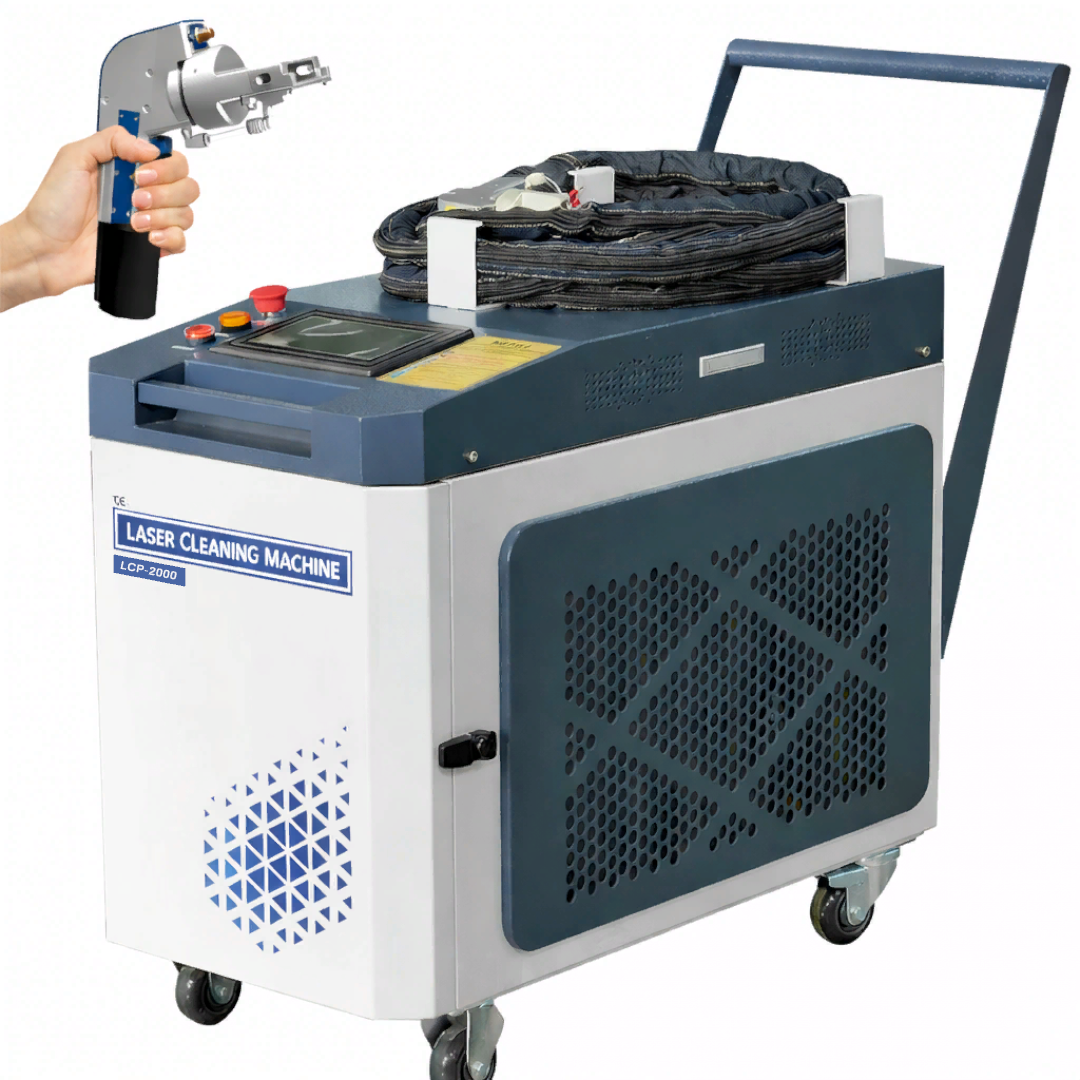
This is one of those questions people don’t always ask upfront.
They’ll research machines. Watch cleaning videos.Compare power levels. Maybe even book a demo.
And then, somewhere late in the process, it hits:
“Wait… can I even run this thing where I work?”
If you’re considering a heavy-duty laser rust removal machine, this is not a small detail. Power requirements can determine whether a machine fits your business or becomes a logistical headache.
Let’s walk through it in a way that actually helps you decide.
Most residential and light commercial spaces in the US run on single-phase power. That’s what powers your tools, pressure washers, and most shop equipment.
3-phase power is different. It’s designed for:
It delivers electricity more efficiently and consistently, which is why large machines rely on it.
You’ll typically find it in:
Not in most garages or small shops.
Once you move into higher power ranges, like 2000W and above, the energy demand increases quickly.
A heavy-duty laser cleaning system needs:
That’s where 3-phase power comes in. It supports continuous operation without stressing the system.
Without it, you may run into:
So the short answer is:
Yes, most heavy-duty laser cleaning machines require 3-phase power.
But that doesn’t mean it’s a deal breaker.
If your work is more mobile, detail-focused, or job-site based, you may not need heavy-duty power at all.
Lower-power systems, especially pulsed units, are often designed to run on standard electrical setups.
These are commonly used for:
For many service providers, this is where they start.
The key is matching the machine to your actual job profile, not the biggest spec on paper.
A lot of buyers assume:
“Higher power = better investment”
But in practice, it’s more like:
“Right power = better business decision”
If you buy a system that requires 3-phase power but your jobs don’t justify it, you end up solving the wrong problem.
On the other hand, if your work involves:
Then trying to avoid 3-phase power may limit your growth.
Yes, but each option has trade-offs.
This is the cleanest long-term solution if you operate from a fixed location.
It involves:
For established businesses, this is often worth it.
This converts single-phase to 3-phase.
It can work, but:
This is not always ideal for high-performance systems.
Some industrial clients already have 3-phase power.
If you’re working in:
You may be able to run your machine on-site without needing your own infrastructure.
For mobile operators, this is sometimes considered.
But heavy-duty systems require:4
This is possible, but not always practical for every business.
Before you choose a machine, ask yourself:
These answers matter more than specs.
This is exactly why laser clean pro takes an education-first approach.
Instead of pushing machines immediately, the goal is to help you understand:
Most people don’t realize how important power requirements are until late in the process. A good laser cleaning company helps you think through this early, so you don’t end up with equipment that doesn’t match your setup.
You do not always need 3-phase power to get into laser cleaning.
But if you’re moving into heavy-duty,high-throughput work, it becomes part of the equation.
The real decision is not about electricity.
It’s about alignment.
Get those right, and the power requirement becomes a clear next step instead of a surprise obstacle.
If you’re unsure what setup makes sense for your situation,that’s exactly the kind of thing worth understanding before you move forward.
Because the wrong machine slows you down.
The right one fits your business from day one.