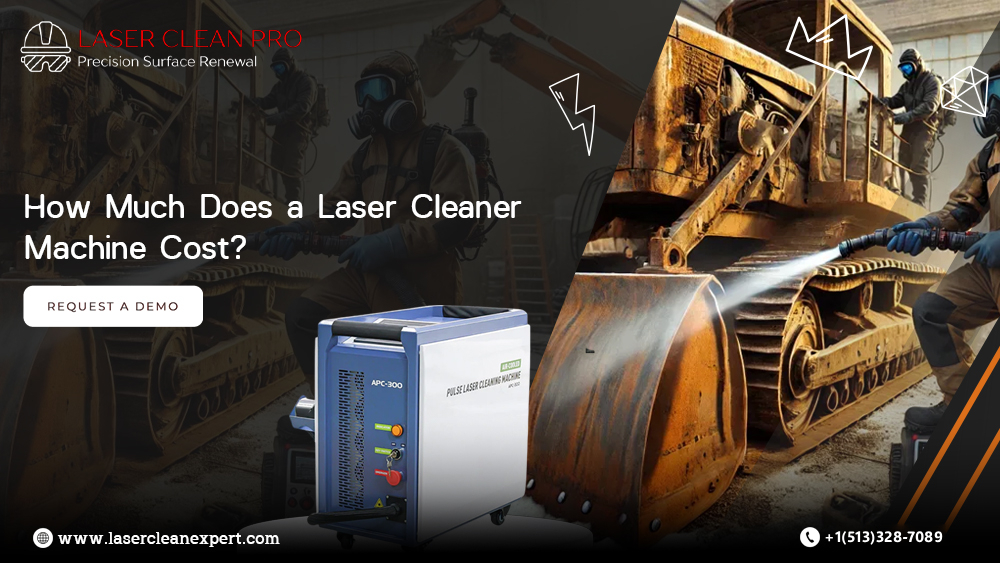
If you’ve tried researching the cost of laser rust removal equipment online, you’ve probably noticed how confusing the market has become.
One supplier lists a machine at a surprisingly low price. Another positions a similar-looking unit as an industrial system for professional use. Then you watch a demo video and wonder whether these machines are even built for the same kind of work.
Call Now
That confusion is common, especially for contractors and business owners exploring laser cleaning for the first time.
The truth is, there is no universal answer to the laser cleaner price question because these systems vary significantly in power, laser type, portability, cooling design, and intended workload.
More importantly, the right machine for automotive restoration is very different from the right machine for structural steel cleaning or industrial maintenance.
So instead of throwing random price ranges at you, this guide focuses on what actually matters:
A laser cleaner machine uses concentrated laser energy to remove rust, paint, oxidation, coatings, oil, and contaminants from a surface without abrasive blasting or harsh chemicals.
The process works by directing laser energy into the unwanted layer. Rust, paint, and oxidation absorb that energy far more quickly than the underlying metal surface. Once heated, the contaminant breaks apart and lifts away from the material underneath.
That makes laser cleaning useful for:
Compared to grinding or blasting, a laser machine for cleaning offers more control and significantly less mess, especially in environments where containment or cleanup is difficult.
One of the biggest misconceptions in the market is the idea that all laser cleaning systems are basically the same.
They are not.
Two machines may look similar online while being designed for completely different workloads.
Several factors affect the overall investment.
This is one of the biggest differences between systems.
Pulsed lasers deliver energy in short bursts. These systems are commonly used for:
Because pulsed systems prioritize control and precision, they are often chosen for sensitive applications where overheating must be avoided.
Continuous Wave systems use a steady laser output and are designed more for:
These machines prioritize cleaning speed and productivity over delicate precision.
For many service businesses, CW systems become the practical choice for larger-scale work.
Understanding machine categories is far more useful than focusing only on price.
These systems are usually:
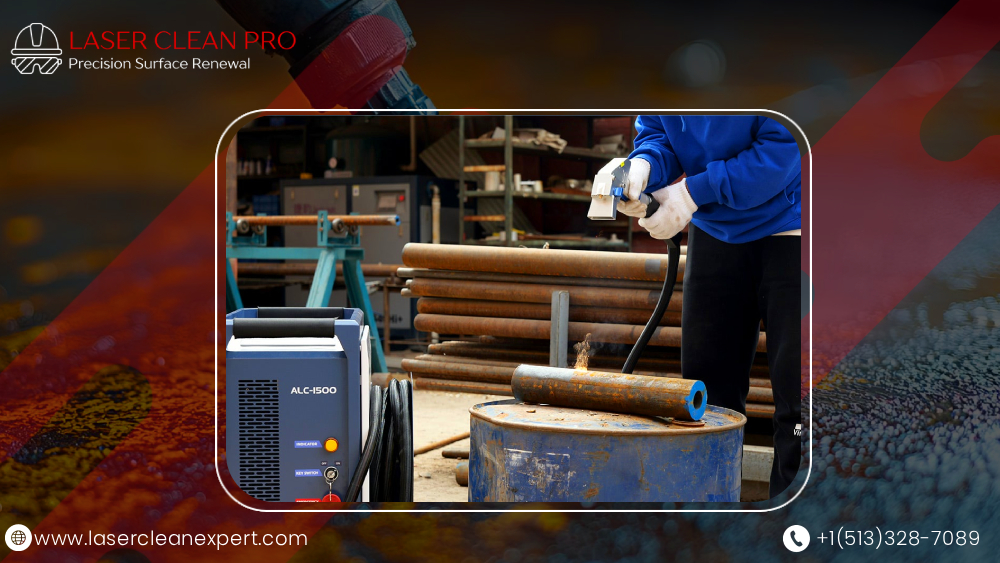
A compact laser rust cleaning machine often makes sense for restoration professionals, automotive shops, or operators handling smaller components and precision cleaning tasks.
They are excellent when:
But they are not designed for large industrial throughput.
This is where many service businesses begin seeing real operational value.
These systems are commonly used for:
For contractors entering laser cleaning services, this category often provides the best balance between:
This is also where many businesses begin comparing the laser paint removal cost of traditional methods versus laser-based workflows.
These machines are built for:
A high-power laser rust removal machine can dramatically improve throughput on demanding projects, particularly when large surfaces and repetitive workloads are involved.
But higher power only makes sense if your actual workload justifies it.
Choosing based purely on wattage often leads businesses to overbuy equipment they rarely use to full capacity.
Several factors influence the overall investment level beyond advertised wattage.
A mobile handheld system designed for field work involves different engineering than a large stationary industrial setup.
Businesses doing:
often place a higher value on portability and setup flexibility.
Industrial laser systems generate significant heat during long cleaning sessions.
Higher-quality cooling systems help maintain:
This becomes especially important in production and industrial environments.
This part is often overlooked.
A machine without proper support can quickly become a workflow problem instead of a business asset.
Good training helps operators:
That guidance matters far more than chasing the lowest advertised price of laser rust remover equipment online.
For the right business, absolutely.
Laser cleaning can help operators:
But the value comes from matching the machine to the type of work you actually perform.
Not from buying the biggest system available.
Before searching for a laser cleaning machine for sale, it helps to ask a few practical questions:
Those answers usually narrow the right machine category down very quickly.
The laser cleaning machine price conversation is more complicated than most websites make it seem.
The right machine depends on:
Some businesses benefit most from precision pulsed systems. Others need the speed and throughput of industrial Continuous Wave machines.
The important thing is not choosing the cheapest machine or the biggest wattage.
It is choosing a system that fits the work you actually do.
Because in laser cleaning, the right fit almost always delivers better long-term value than chasing specs alone.
The price of a laser cleaning machine depends on factors such as laser type, power output, cooling system, portability, and included support. A compact pulsed system for precision work will have different requirements from a high-power Continuous Wave system designed for heavy industrial cleaning. For an accurate recommendation, it is better to start with your applications and workload rather than comparing prices based only on wattage.
Laser cleaning can be a profitable service when the equipment matches the work you plan to take on. Service providers can use laser cleaning for rust and corrosion removal, paint and coating removal, surface preparation, equipment maintenance, and restoration. Your potential return depends on factors such as local demand, job size, operating costs, utilization, and the rates you can charge. The key is choosing equipment that supports the type and volume of work you expect to handle.
The investment varies considerably between machines. Power level, pulsed versus Continuous Wave technology, cooling requirements, portability, and support can all affect the overall cost. A lower-cost machine is not necessarily the better investment if it cannot handle the applications you intend to offer. Start by identifying your typical jobs, then compare machines that are designed for that workload.
Laser cleaning service rates depend on the project rather than a universal hourly price. Factors such as the amount and type of contamination, surface area, material, accessibility, and preparation requirements can all affect the quote. A small component with light rust requires a very different amount of work from heavily corroded structural steel. Service providers should evaluate the job requirements before establishing a price.
The cost depends on whether you are hiring a service provider or investing in equipment. For a cleaning project, the surface condition, contamination, size, accessibility, and required processing time all matter. For equipment ownership, the laser type, power, cooling system, portability, training, and support contribute to the overall investment. Looking at total operating costs can provide a better picture than focusing only on the initial purchase price.