Rust is rarely the whole problem.Removing it is one task; removing it without creating a new problem in themetal underneath is where the choice of method starts to matter. A wire brushcan handle a rusty bracket and a grinder can make quick work of heavy scale,while chemicals, abrasive blasting, electrolysis and laser cleaning eachapproach the same problem in a very different way.
So, what is the best way to removerust from metal? It depends on what you’re cleaning, how much corrosion ispresent and what the surface needs to look like afterward. Below, we compareseven methods side by side, including the labor, consumables, cleanup, surfacecontrol and practical limits of each.
If rust removal is part of your workweek after week, there’s a bigger question to answer: is your cleaning methodsupporting your workflow, or has it become a significant share of the laboritself?
Before reaching for a brush, grinderor cleaner, look at what the rust is sitting on. A thin orange film on a steelbracket is a very different job from thick scale covering an old machine part.Rust forms when iron or steel reacts with oxygen and moisture, but thecorrosion doesn’t always stop at the surface. Heavy rust can leave pitting,alter the texture of the metal or conceal damage underneath. The part may alsocarry paint, a protective coating, oil or other contaminants, and those affecthow aggressively it should be cleaned.
That makes the job more than simplygetting rust off metal. Clean a corroded surface too aggressively and you canremove some of the base metal you’re trying to preserve; abrasive methods inparticular don’t always distinguish between corrosion and the substrate. On theother hand, a method gentle enough for a precision surface may be unnecessarilyslow on a large, heavily rusted component.
The real question is twofold: how muchcorrosion needs to come off, and what needs to remain afterward? Once you’veanswered both, the best way to clean rust from that part becomes much easier toidentify.
Rust can be tackled in several ways,and each method works on a different principle. A wire brush scrapes corrosionaway, chemicals react with it, abrasive blasting knocks it off with force,electrolysis relies on an electrical reaction and laser cleaning usescontrolled energy to remove it. Speed matters, but it isn’t the whole picture.What each method leaves behind, and the labor, consumables and cleanup requiredto get there, matter just as much.
Sometimes the simplest tool is stillthe right one. If a hand tool has picked up a light layer of surface rust, awire brush or sandpaper may be all it needs. Wire brushes scrape corrosion fromthe metal and sandpaper wears it away through abrasion, while rotary brushes ona drill or grinder speed things up when there’s more area to cover. There’slittle setup, no specialized equipment and the result is visible as you work.
This approach suits light rust onsmall parts, brackets, tools and localized patches. It’s inexpensive,accessible and easy to control by hand. The tradeoff appears as the job grows.Cleaning dozens of parts or a large surface can take hours, and brushes andsandpaper struggle in tight corners. Excessive pressure or an overly coarseabrasive can also alter the surface underneath. For occasional light rust,that’s an acceptable tradeoff; for larger or recurring jobs, the labor quicklyoutweighs the simplicity.
When rust has built up into thickscale, sandpaper won’t get you very far. An angle grinder fitted with the rightwheel, flap disc or wire cup can remove heavy corrosion quickly, particularlyon larger components or localized areas where aggressive material removal isacceptable.
The tradeoff is precision. Grindingdoesn’t separate rust from metal on its own, so the operator has to control thetool carefully to avoid removing more of the underlying surface than intended.Heat, dust, noise and operator fatigue also become part of the job, and cornersand irregular shapes are difficult to reach. Grinding makes sense when heavycorrosion needs to come off and some surface alteration is acceptable. Whenpreserving the original shape or finish matters, the faster method isn’tnecessarily the better one.
Not every rust-removal job requiresforce. Chemical rust removers use a reaction to loosen, dissolve or convertcorrosion, and the exact process depends on the product. Acid-based treatmentssuch as phosphoric-acid products work differently from chelating removers. Someare designed for soaking parts, while others are applied directly. If you’relooking for the best way to dissolve rust on a part with complex geometry, asoak in the right solution can reach areas a brush or grinder can’t.
That makes chemical treatment usefulfor small and medium-sized components, but it comes with a process to manage.Contact time matters, and the product must be compatible with the base metaland any remaining coating. Rinsing, drying, ventilation, safe handling anddisposal are also part of the job. For the right component, none of this is aproblem; the question is whether the treatment time and cleanup fit yourworkflow.
For a small rusty object in thegarage, you may not need specialized equipment or even a commercial rustremover. White vinegar and citric acid are commonly used to loosen surfacerust, while lemon juice and salt or a baking soda paste can help with lightercorrosion and scrubbing. These approaches work best on small objects that canbe soaked or worked by hand.
They’re inexpensive, accessible andreasonable for a one-off DIY restoration, but they rely on patience: soaking,scrubbing, checking the surface and often repeating the process. Householdmethods simply aren’t built for the demands of regular, high-volume rustremoval.
Once rust covers a large component orhas built up into heavy scale, working across every inch with a hand toolquickly becomes impractical. Abrasive blasting tackles the problem with ahigh-velocity stream of media directed at the surface. Sandblasting, beadblasting and shot blasting use different media and equipment, but the principleis the same: the impact breaks corrosion away. That makes blasting well suitedto heavy rust, large components, industrial cleaning and surface preparation,and it covers ground far faster than manual abrasion.
The job doesn’t end when the rust isgone, however. Media has to be supplied and contained, dust must be controlledand spent abrasive has to be collected and disposed of. The impact can alsochange the profile of the underlying surface. When aggressive removal and broadcoverage matter most, blasting can be exactly the right tool. The calculationchanges when you also need tighter surface control, lower consumable use orless cleanup, and that’s where laser cleaning deserves a closer look.
Electrolysis takes yet another route.Instead of scraping, grinding or chemically dissolving the corrosion, it uses alow-voltage electrical current and an electrolyte solution to separate rustfrom ferrous metal. Because the process doesn’t rely on abrasion, it’s apopular choice for restoration work on rusty tools, automotive parts and smallsteel components where preserving an older part matters.
The tradeoff is setup. The part mustbe submerged in a suitable solution with the correct electrical arrangement,and the process often runs for hours. That’s manageable for a small restorationproject but impractical for large fixed structures or businesses processingparts continuously. For the right object, electrolysis is effective; it simplydoesn’t fit every rust-removal job.
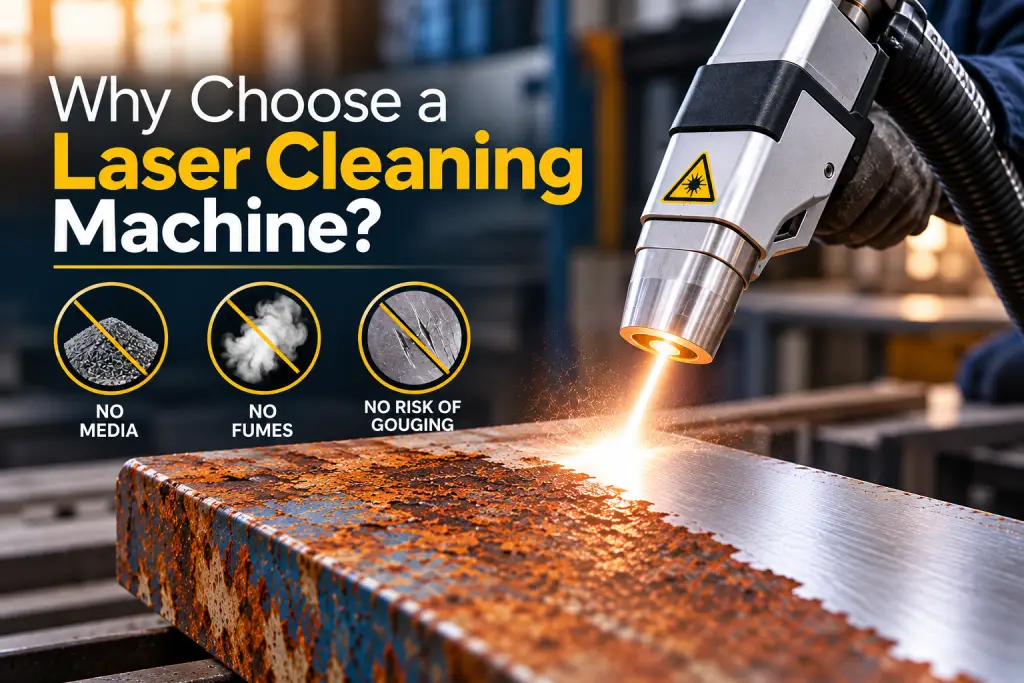
Laser cleaning takes a fundamentallydifferent approach. Instead of abrading the surface or bombarding it withmedia, it uses controlled laser energy to remove rust. Rust and the base metalrespond differently to the laser’s energy, so with the right settings thecorrosion is removed while the effect on the underlying material stays limited.The process is called laser ablation, and the practical point is that the beamis tuned to target unwanted material on the surface.
That control is why results depend onthe material, rust thickness, surface condition, laser type and settings. It’salso why choosing a machine on wattage alone can be misleading. For businesses,the appeal extends beyond the cleaning itself. As a non-contact process, lasercleaning avoids abrasive action on the part. There’s no blasting media to buy,contain or sweep up, and a consistent, repeatable process makes recurring jobseasier to standardize. Laser Clean Pro’s mobile pulsed machines, the LCP-300P-Land LCP-500P-L, also travel to the job, so the work isn’t limited to the shop.
Laser cleaning isn’t the answer toevery rust problem, however. Very heavy corrosion and very large surfaces callfor a realistic look at cleaning speed and throughput, and for an occasionalDIY job, specialized equipment is hard to justify. The better way to view lasercleaning is as another tool in the toolbox. It holds the advantage when surfacecontrol, cleanup, consumables and repeatable results matter as much as removingthe rust.
When you’re choosing a process,however, “Does it remove rust?” is only the first question. The more usefulcomparison is what the job looks like before, during and after cleaning. Thetable below gives a practical overview. Treat it as a starting point ratherthan a fixed ranking, since the right method can change considerably with themetal, the condition of the rust, the size of the job and the required finish.
General comparison only. Actualresults vary according to the substrate, corrosion, equipment, processsettings, surface requirements and job conditions.
*Laser cleaning produces fineparticulate and fumes from the removed material; fume extraction isrecommended.
For a rusty tool, bracket or smallpart, the best way to get rust off metal is usually the simplest one: wirebrushing, sanding or a suitable chemical treatment. For light rust, householdmethods can also do the job without unnecessary equipment or setup.
For thick corrosion and mill scale,grinding and abrasive blasting offer strong material removal. Laser cleaning isalso an option when heavy rust needs to come off with more control over theunderlying surface. A continuous-wave (CW) machine such as the LCP-1500C-T isbuilt for this kind of work on large structural parts. A pulsed machine likethe LCP-500P-L handles heavier contamination with lower heat input.
Laser cleaning deserves considerationwhen removing the rust is only half the job. Its controlled, non-contactprocess minimizes abrasive interaction with the underlying surface. Pulsedlasers such as the LCP-300P-L and LCP-500P-L also keep heat input low, whichsuits restoration work, thin parts and post-weld cleaning.
When rust removal becomes recurringwork, the method has to fit the wider operation, not just the surface. Labor,consumables, cleanup, throughput and repeatability all factor into thedecision. For occasional rust, simple tools may be all you need; for specializedor recurring work, a more controlled process often makes better business sense.
If rust removal is an occasional task,dedicated equipment is a difficult investment to justify. But if you’reregularly running rusty parts through a blasting cabinet, grinding them by handor losing time to setup and cleanup on every job, the calculation changes.
Start with the work already comingthrough your door. A blasting contractor may have the customers and workloadbut find that some jobs are better suited to a process without abrasive media.A restoration company may handle older parts where preserving the originalsurface matters. A fabrication or welding shop can use laser cleaning forpre-weld prep and post-weld oxide and heat tint removal without setting up afull blasting process. Mobile machines also open the door to on-site work fornew entrepreneurs building a service business.
Then look at the hours that neverappear on the quote: loading media, containing dust, clearing the work area andcleaning parts after blasting. Consider your job mix as well. If customers alsoneed paint, coatings, oxides or other contaminants removed, one machine hasmore opportunities to earn its keep. Some contractors also expand into adjacentservices such as wood restoration with a laser cleaning machine for wood.Finally, consider the jobs you currently turn away. A part that’s awkward toblast, too delicate to grind or impractical to treat chemically may become workyou can quote.
That’s the real business case forlaser cleaning: not owning a laser for its own sake, but solving enough realcleaning problems to justify a place in your operation.
It’s tempting to start with thebiggest number on the spec sheet. More power must mean faster rust removal,right? Not necessarily. A laser cleaning machine is a tool for a particularkind of work, so the better starting point is the work itself. There’s nosingle best rust removal tool for every job. A shop cleaning small restorationparts has different needs from an operator working across large, heavilycorroded components all day.
Look at the material first. Then lookat what’s sitting on it, how thick the rust or coating is, how large thecleaning area will be and how much control the job demands. If the machine willrun every day, job frequency and throughput matter too. If it needs to movebetween job sites, mobility becomes part of the decision, and that’s where anair-cooled, mobile pulsed machine has a clear edge. Choose the one that matchesthe jobs you actually expect to put through it.
The pulsed-versus-CW question is agood example of why there’s no single “best” laser. Pulsed systems deliverenergy in short, high-peak bursts, which keeps heat input low. They’re thestronger fit for restoration, thin or delicate parts and post-weld cleaning,where the underlying surface needs protecting. Laser Clean Pro’s LCP-300P-L andLCP-500P-L are both air-cooled, mobile pulsed machines. The LCP-300P-L is amoderate investment suited to lighter rust and detailed work. The LCP-500P-Lcovers more surface area faster and handles heavier contamination.
Continuous-wave (CW) systems deliver aconstant beam and suit heavy rust, mill scale and large surfaces wherethroughput is the priority. The tradeoff is that CW puts more heat into thepart. Our LCP-1500C-T, a 1500W air-cooled CW machine, is the lowest investmentin the lineup and is designed for facility-based work on large structuralparts. Pulsed lasers cost more per watt, so comparing wattage across the twotypes can be misleading..
Getting corrosion off a piece of metalis one task. Doing it repeatedly, without losing hours to preparation andcleanup, while still delivering the surface the job requires, is another.That’s why the better question isn’t “Which rust-removal method is best?” It’s“Which process makes the most sense for the work I need to do?”
For some jobs, the answer will stillbe a brush, grinder, chemical treatment or blasting system. For others, lasercleaning offers a more controlled and cleaner way to work. If it looks like apractical fit for your rust-removal jobs, Laser Clean Pro can help you comparethe LCP-300P-L and LCP-500P-L against the work you handle. Schedule aone-on-one consultation, and we’ll share videos of our machines cleaningsurfaces like yours. Every machine comes with start-up videos, settings guidesand direct access to our team, and financing is available through our financingpartner.
Explore laser rust cleaning machines.
Q1. What is the best way to remove rustfrom metal?
There’s no single best method. The best wayto remove rust from metal depends on the type and thickness of the rust, thebase metal, the finish you need and the size of the job.
Q2. What is the best way to remove heavyrust from metal?
Grinding and abrasive blasting remove heavycorrosion quickly. Laser cleaning is also worth considering when surfacecontrol matters, and a CW machine like the LCP-1500C-T is suited to heavy rustand mill scale on large parts.
Q3. Can laser cleaning remove rust frommetal?
Yes. Controlled laser energy removes rustwhile limiting the effect on the underlying metal, provided the machine andsettings suit the job.
Q4. Does laser cleaning damage thesurface underneath rust?
Laser cleaning offers a high level ofsurface control, but results depend on the metal, rust, equipment and settings.Pulsed lasers keep heat input low, which helps protect thin or delicate parts.
Q5. Is laser rust removal better thansandblasting?
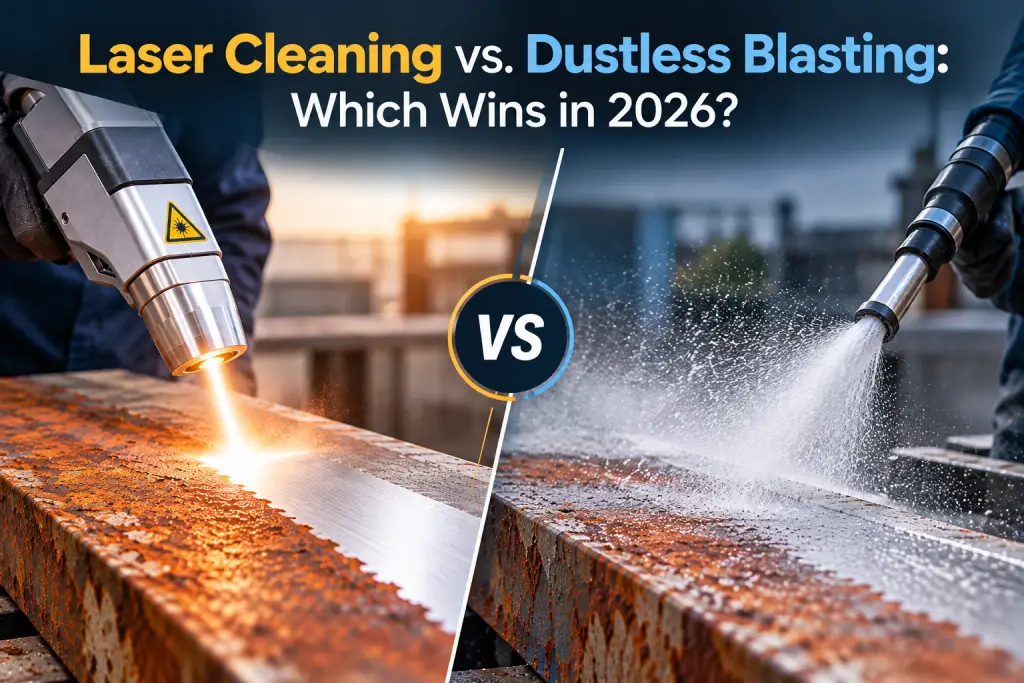
Not for every job. Sandblasting suits heavyrust and large areas, while laser cleaning holds the advantage when reducingmedia use, cleanup and surface impact matters.
Q6. What type of laser is best for rustremoval?
It depends on the work. Pulsed lasers suchas the LCP-300P-L and LCP-500P-L suit precision work, restoration and low heatinput. CW lasers are better suited to heavy rust, larger surfaces and higherthroughput.