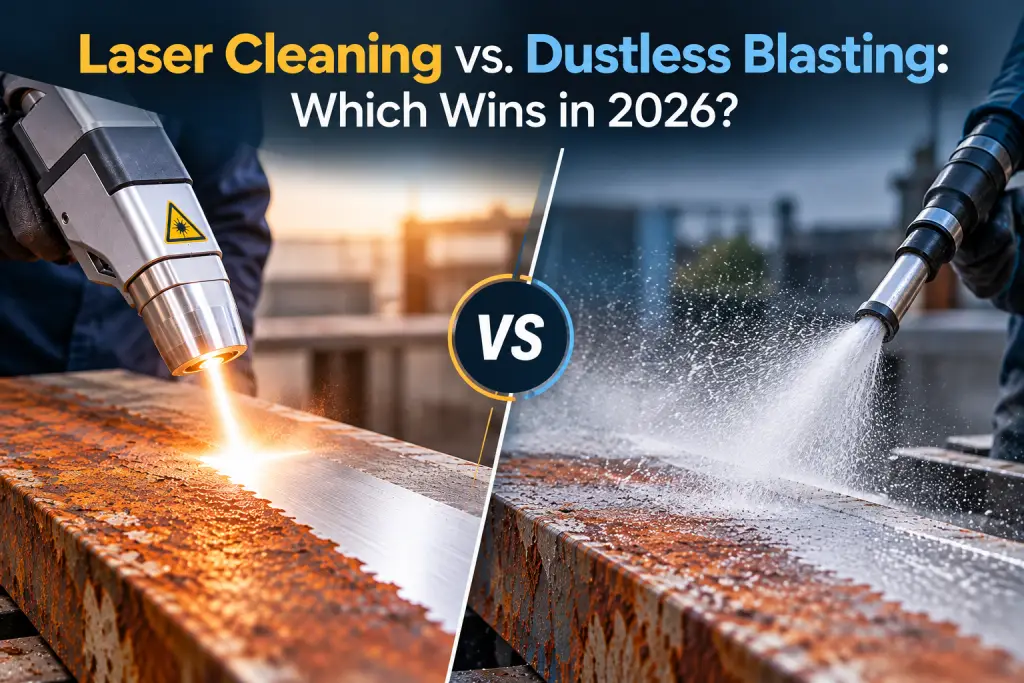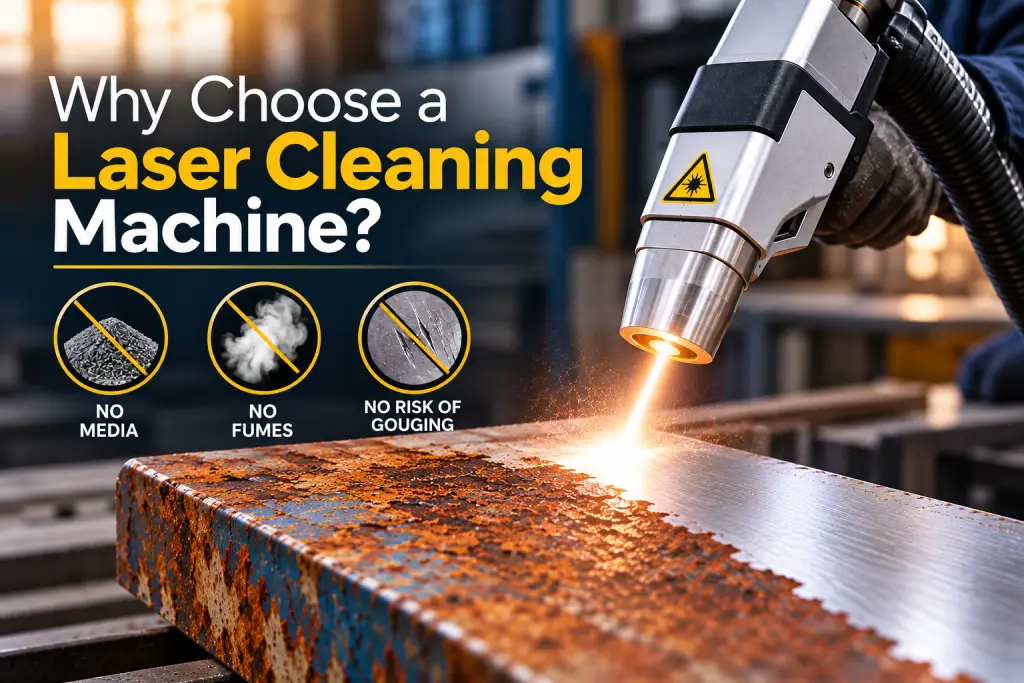
A beam of light can do what grit, chemicals, and elbow grease used to. Laser cleaning is a modern technology that clears rust, paint, and grime layer by layer as the beam passes over the surface, with no media, no fumes, and no risk of gouging the metal underneath.
That combination is why a growing number of service businesses and industrial teams are swapping sandblasters and chemical strippers for something that runs on light.
A laser cleaning machine directs a concentrated beam of light at a surface. Rust, paint, oil, and other contaminants absorb that energy and break apart or vaporize, while the base material such as steel or aluminum reflects most of the beam and remains intact.
More heat-sensitive materials like wood or stone need lower power settings to avoid surface damage. There's no abrasive media, no chemical stripper, and no water involved.
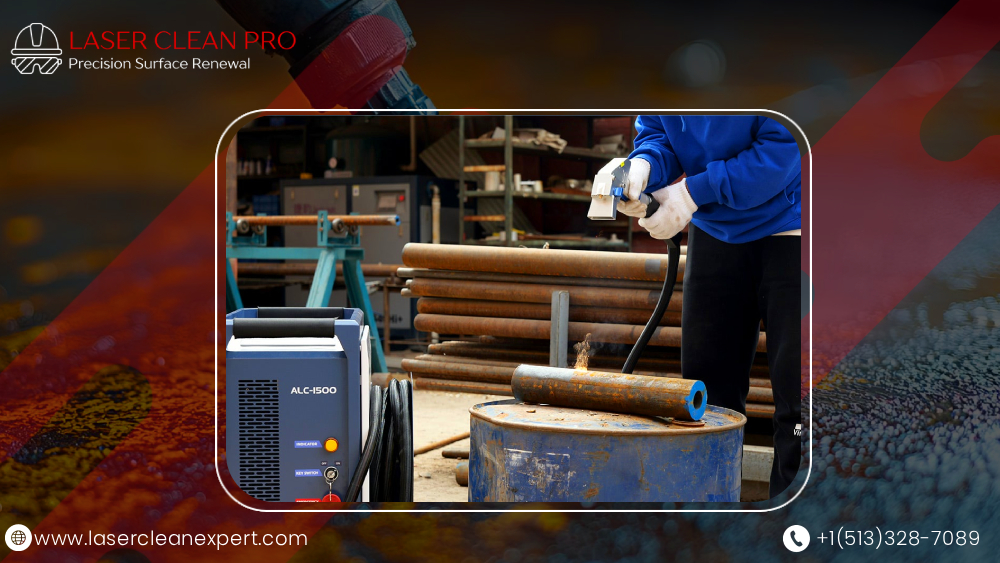
The operator controls the beam with a handheld or mounted head, adjusting power and speed based on the coating and the material underneath. Because the process is non-contact, it works on delicate parts as well as heavy structural steel, just with different settings.
Knowing the differences up front means choosing a machine that matches your actual jobs, instead of paying for power or precision you'll never use.
Pulsed lasers fire in short, high-intensity bursts. They give the operator more control over delicate work like light rust or thin coatings, which suits restoration and detail-focused businesses.
Continuous wave lasers run a steady beam and handle heavier, thicker material faster. They're common on industrial contracts where throughput matters more than fine detail.
Format matters just as much as beam type:
Handheld units give the operator full control for detail work, tight spaces, and mobile jobs
Cart-mounted and robotic arm systems trade that flexibility for speed and consistency on larger, repetitive surfaces
That range is part of what makes laser cleaning adaptable across so many industries, since most jobs can be matched to a configuration built for them.
Yes. Laser cleaning is an established industrial process, not an emerging experiment. It's used across automotive restoration, manufacturing, and heavy equipment maintenance.
The reason it works depends on how differently materials absorb laser energy. Rust and paint absorb the beam and break down almost instantly, while bare metal reflects most of it and stays undamaged.
On a rusted steel panel, for example, a laser helps clear the corrosion layer by layer without grinding into the metal beneath. The same principle applies to paint stripping, where the coating lifts away while the material underneath stays intact.
Results can vary by machine power and coating thickness, but the core technology is proven and widely adopted.
Beyond the non-contact, chemical-free process covered above, laser cleaning offers several other practical advantages for businesses evaluating a switch:
For a shop currently paying for blasting media or chemical disposal, these savings add up on high-volume work.
Laser cleaning has limitations, just like any other cleaning method. Understanding them makes it easier to decide whether it's the right fit for your work.
These factors don't make laser cleaning less effective. They simply help determine which machine and power level are appropriate for the work.
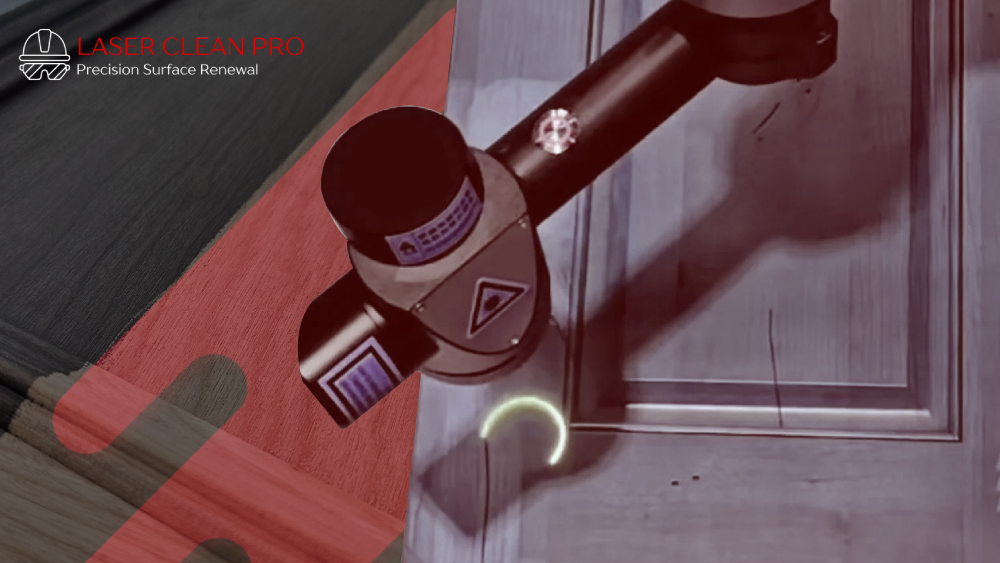
Most coverage of laser cleaning machines focuses almost entirely on metal and rust removal, which leaves out a growing use case: wood. Laser cleaning can strip old finish, char, soot, and even mold from wood surfaces without sanding through the grain or introducing chemical strippers that soak into the material.
That makes it useful for furniture restoration, historic preservation work, and woodworking shops handling refinishing jobs.
The key difference from metal work is power control. Wood scorches more easily than it corrodes, so operators run lower power settings and slower passes to lift the surface material without charring what's underneath.
If done correctly, laser cleaning can reveal original wood grain that sanding would otherwise remove along with the finish. Laser cleaning machine for wood
Laser cleaning pays off fastest for businesses running regular cleaning or stripping work. The upfront cost is higher than traditional equipment, but there's no media to replace and no chemical disposal fees, so the savings build with every job.
For occasional or one-off work, renting or hiring the job out often makes more financial sense than buying outright.
Laser cleaning machine pricing depends on several factors rather than a single number: machine category, power level, cooling system, and the training and support included with the purchase.
A compact unit built for mobile detail work and restoration jobs sits at a different investment level than a higher-output machine built for heavy industrial stripping. The difference comes down to the jobs each one is designed to handle, not the spec sheet alone.
Financing and leasing options are available for both new entrepreneurs and established service companies, which can lower the barrier to entry considerably. Because the right machine depends on the applications a business plans to run, a remote demo or consultation is the most reliable way to get an accurate quote for a specific use case.
Laser Clean Pro, for example, offers remote demos specifically to help match machine type to a buyer's actual jobs before any purchase decision.
Laser rust cleaning machines show up across a range of paying jobs, not just as a novelty.
Because the process reaches tight spaces without disassembly, operators can clean equipment in place rather than pulling it apart first, which saves significant time on maintenance jobs.
Some businesses also offer laser cleaning as a standalone service for clients who need occasional access rather than owning a machine outright. Can You Remove Rust From Equipment Without Taking It Apart?
A shop that runs frequent laser cleaning jobs recovers the machine's cost faster than one that uses it occasionally, since each job adds material and disposal savings rather than ongoing consumable costs. The more consistently the machine runs, the sooner it pays for itself.
Laser cleaning works best for businesses and teams that value speed, precision, and lower running costs over the lower upfront price of traditional methods.
Once you know the jobs the machine needs to handle, narrowing down the right model becomes much more straightforward. A demo is the fastest way to see how a specific machine fits your work before making a decision.
Yes. Rust and coatings absorb laser energy and break down, while the base material reflects most of the beam and stays intact.
No consumables, faster turnaround on many jobs, precise control near delicate parts, and less cleanup than blasting or chemical stripping.
Higher upfront cost, a learning curve on settings, and slower output than blasting on some large, heavily coated surfaces.
For businesses running regular cleaning or stripping work, lower running costs often offset the higher upfront investment over time.
Cost depends on power, cooling system, and portability rather than a fixed number. A demo or consultation gives an accurate figure for your use case.
A laser cleaning machine is a good fit for businesses that regularly remove rust, paint, coatings, or other surface contaminants. Restoration companies, fabrication shops, industrial maintenance teams, and contractors expanding their services often benefit the most because they can reduce consumable costs while improving workflow efficiency.