Yes, laser cleaning can remove mostpaints and coatings from metal without significantly affecting the surfaceunderneath. The result depends on three variables: the coating, the substrateand how the laser is configured. That last variable is what determines whetherthe coating comes off cleanly or the part underneath gets damaged.
Stripping a layer of paint is one job.Stripping it while keeping the metal in the condition the next step requires isanother. A thick industrial coating on structural steel, several layers of oldpaint on a restoration part and a thin finish on a detailed component will eachrespond differently to the same settings.
Laser paint removal gives the operatora controlled way to handle that range. Instead of scraping, grinding, blastingor chemically stripping the coating, the laser delivers concentrated energy tothe unwanted layer and leaves the substrate largely intact. So the short answerto “can laser remove paint” is yes, provided the process is matched to the job.The goal isn’t simply to make the paint disappear. It’s to remove the coatingwithout turning the surface underneath into the next problem.
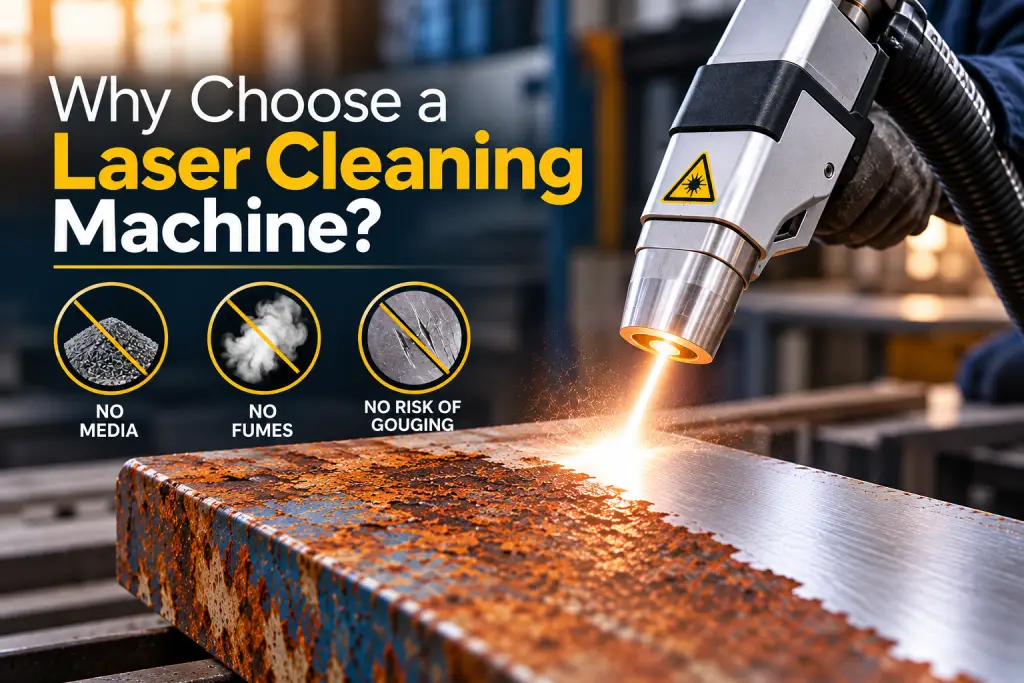
Paint is the unwanted layer, so thelaser targets it directly rather than wearing it away through abrasion. As thecoating absorbs the laser energy, it heats rapidly and breaks apart, detachesfrom the surface or vaporizes, depending on the coating and the processsettings. This is known as laser ablation.
Ablation sounds technical, but thepractical idea is simple: the laser concentrates energy in the coating to breakits bond with the substrate. Most paints absorb that energy more readily thanbare metal, so a properly configured laser that removes paint can strip thecoating while the metal underneath reflects much of the remaining energy. Thatdifference in absorption is what makes controlled removal possible.
The removed material leaves thesurface as fine particles and fumes, which is why fume extraction is a standardpart of any laser paint removal setup.
Coating thickness and composition alsochange how the process behaves. A single thin layer of paint may come off inone pass, while five layers of aged industrial coating can take several. Howthe operator handles that difference is what protects the surface underneath.
This is where effective laser cleaningdiffers from simply putting more power into a beam. The operator has to balancethe settings that control how much energy reaches the surface and how long itstays on any one area. These include power, pulse characteristics, scan speed,spot overlap and the number of passes.
Too little energy leaves coatingbehind. Too much, or the wrong combination of settings, can discolor the metal,alter its surface texture or warp thin material. The aim isn’t maximum energy.It’s enough energy to remove the coating without leaving excess heat in thesubstrate.
The type of laser plays a role aswell. Pulsed lasers deliver energy in short, high-intensity bursts with lowheat input, which suits thin, delicate or detailed parts. Continuous-wavelasers put more heat into the part, a tradeoff that pays off on heavy coatingsand large, robust surfaces.
Surface protection matters most whenthe metal has to be ready for the next stage of the job, whether that’swelding, recoating, restoration, inspection or returning the component toservice. A clean, unaltered substrate gives a new coating a sound surface tobond to and reduces rework downstream.
Paint isn’t one material, and metalisn’t one surface. The coating type and the substrate underneath both changehow the job needs to be approached. A powder-coated steel part behavesdifferently from a stainless-steel component carrying several layers of oldpaint. Aluminum brings its own considerations because it reflects more laserenergy and conducts heat away quickly.
Laser cleaning is commonly used toremove:
● Powder coating: Thick, durable finishes that typically take more passes thanconventional paint.
● Epoxy: Hard, chemically resistant coatings that often call for adjustedsettings.
● Industrial paint: Standard protective and finish paints on equipment and structures.
● Multiple paint layers: Built-up coatings on older or repeatedly refinished parts.
● Protective coatings: Primers and other layers applied to guard against corrosion.
The most common substrates are steel,stainless steel and aluminum.
The more useful question isn’t “Can alaser remove powder coating?” It’s “Can this coating be removed from thissubstrate at the finish and pace this job requires?” A part headed forrepainting may only need a clean, sound surface, while a restoration job mayrequire every original detail to be preserved. Evaluating the coating, thesubstrate and the finish the next step requires together gives a far morereliable answer than looking at any one of them alone.
Two jobs that look almost identicalfrom across the shop can behave very differently under the laser. Picture twosteel components, both coated in black paint. One has a single thin coat andneeds a quick strip before repainting. The other carries several old layersover machined details that have to stay intact. Both would be called paintremoval, but they aren’t the same laser cleaning job, and the settings, paceand machine that suit one may not suit the other.
The required finish matters just asmuch. Stripping a coating quickly and stripping it while carefully preservingthe surface underneath are different goals, and they call for differentsettings. That’s why choosing a laser on wattage alone can lead in the wrongdirection. A higher-wattage machine isn’t automatically the better choice forlaser paint removal. The machine has to match the work.
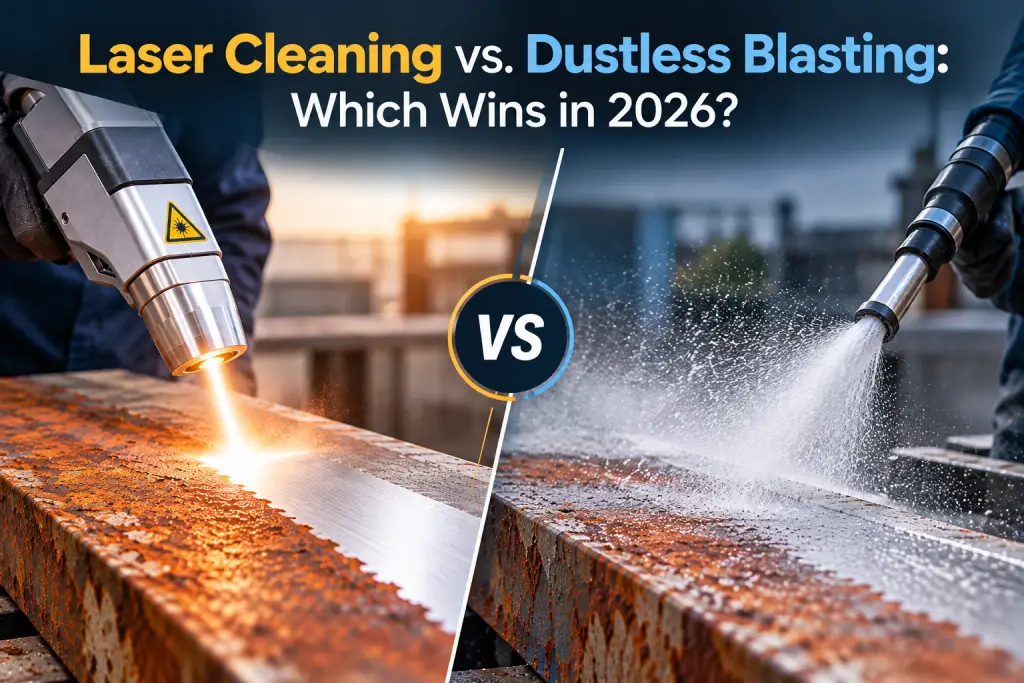
If you already have a grinder orblasting setup in the shop, it’s reasonable to ask why you should change theprocess. Sometimes you shouldn’t. Grinding is fast and aggressive, and for arobust component where surface alteration isn’t a concern, it can be perfectlypractical. Chemical stripping makes sense when the part is suitable forimmersion or controlled chemical treatment, and abrasive blasting remains aproven way to cover large surfaces and remove heavy coatings. The realdifference is what comes along with each method.
Laser cleaning doesn’t eliminate theneed to think through the job. It changes what you have to manage. There is noabrasive media to buy, contain or clean up, and no chemical bath to maintain ordispose of. Because the process is non-contact, the operator can work ondetailed or hard-to-reach surfaces without wearing them down. For many servicebusinesses, less setup, masking and cleanup translates directly into laborsavings.
That said, if the only requirement isto strip a large, rugged surface as aggressively as possible, blasting maystill hold the advantage. The method should fit the job, not the other wayaround.
Paint removal rarely happens becausesomeone doesn’t like the color. Usually, something needs to happen next: amachine component needs repair, an automotive part is being restored, a coatinghas to come off before welding or inspection, or a fabricated part needs itssurface prepared for another treatment. Laser paint removal fits into thatworkflow across a range of applications:
● Fabrication and welding: Removing paint and coatings before welding, then cleaning heat tintand oxides afterward.
● Machinery and industrialmaintenance: Stripping coatings from equipment forrepair, inspection or repainting.
● Automotive and restoration: Taking parts back to bare metal while preserving original details.
● Marine repair: Refurbishing hardware and components exposed to harsh conditions.
● Surface preparation: Producing a clean substrate for recoating or other treatments.
Paint is rarely the only contaminant abusiness encounters, either. The same equipment can double as a laser rustcleaning machine for rust and oxidation removal. The settings used to removerust with laser cleaning aren’t the same ones used to strip a coating, though,because paint and rust respond differently to laser energy. For a servicebusiness, that versatility is a large part of the value. A laser for removingpaint doesn’t have to be dedicated to one coating or one type of customer. Itcan handle many of the different cleaning problems that land on the sameworkbench.
Some cleaning jobs come to your shop.Others have to be handled where the part sits. A large machine componentinstalled at a customer’s facility can’t easily be moved into your workshop,and neither can an awkwardly shaped fabrication or a section of equipment thatonly needs a coating removed from one area. That’s where a handheld laser thatremoves paint on location makes practical sense. Instead of rearranging the jobaround a fixed cleaning station, the operator brings the cleaning system to thecomponent.
A handheld laser cleaning machine isespecially useful for:
● On-site work: Cleaning equipment and structures at a customer’s facility withoutdisassembly or transport.
● Irregular shapes: Reaching contours, corners and recesses that are difficult to blastor grind evenly.
● Large equipment: Treating components too big or too heavy to bring into the shop.
● Localized removal: Stripping coating from a defined area while leaving the surroundingfinish intact.
● Mobile service work: Building a cleaning business that travels to the customer.
Laser Clean Pro’s pulsed models,including the LCP-300P-L and LCP-500P-L, are air-cooled and mobile, so theymove easily between job sites. The LCP-500P-L covers more surface area fasterand handles heavier contamination than the LCP-300P-L.
Handheld doesn’t meanone-size-fits-all, though. The coating, substrate, surface area, requiredfinish and expected workload still determine whether a particular system issuitable, and a small restoration component has very different requirementsfrom a large industrial structure. Choose handheld equipment because mobilitysolves a problem your current workflow actually has, not simply because itsounds useful.
The easiest mistake is to start withthe machine. Start with the jobs instead. A business focused on detailedrestoration parts has very different requirements from one stripping heavycoatings off large industrial components. If the machine will travel tocustomer sites, mobility matters. If it will run every day, throughput matters.If the surface has to meet a particular finish afterward, control matters.
Before comparing models, look at:
● Material: What substrates will you clean?
● Coating: Paint, powder coating, epoxy or multiple layers?
● Thickness: How much material needs to come off?
● Surface size: Small components or large areas?
● Precision: How carefully does the underlying surface need to be treated?
● Frequency: Occasional jobs or regular daily work?
● Mobility: Shop-based or on-site?
● Throughput: Detailed cleaning or high-volume production?
Once those answers are clear, the nextdecision is whether a pulsed or continuous-wave laser fits the work better.
Pulsed systems deliver energy inshort, high-intensity bursts. They put less heat into the part, which makesthem a strong fit for restoration, thin or delicate components, precision workand post-weld cleaning. Continuous-wave (CW) systems deliver a steady beam andsuit heavy rust, mill scale, thick coatings and large surfaces where throughputmatters most, with the tradeoff of more heat input. Pulsed lasers also costmore per watt, so a pulsed system typically represents a higher investment thana CW system of similar power.
Laser Clean Pro’s lineup reflects thatsplit. The LCP-300P-L and LCP-500P-L are mobile pulsed systems for contractorswho need control and portability, with the LCP-500P-L offering greater capacityat a higher investment. The LCP-1500C-T is a facility-based CW system for heavyrust, mill scale and large structural parts, and it’s the lowest investment ofthe three.
Neither type automatically wins, whichis why “How many watts?” shouldn’t be the first question. The better questionis “What work will this machine be doing most of the time?” Once you have thatanswer, the specifications become much easier to judge.
A successful paint removal job isn’tmeasured only by how quickly the paint disappears. Look at the condition of themetal afterward, the cleanup, the operator time and what the next stage of thejob requires. That’s where the choice of cleaning method starts to matter.
Laser paint removal gives businessesanother way to approach paint and coating removal, particularly when controland a cleaner process are worth more than the most aggressive tool available.If you’re considering a laser system, don’t start by asking which machine isthe most powerful. Start by looking at the work in front of you.
If that work points toward mobile,controlled cleaning, the LCP-300P-L and LCP-500P-L are a strong place to start.Schedule a one-on-one consultation with the Laser Clean Pro team, and we’llshare videos of our machines cleaning surfaces similar to yours. Financing isavailable through our financing partner.
Explore Laser Clean Pro’slasercleaning machines
Q1. Can laser remove paint from metal?
Yes. Laser cleaning can remove most paintsand coatings from metal, including steel, stainless steel and aluminum. Theprocess needs to be matched to the coating, substrate, thickness and requiredfinish.
Q2. Can laser cleaning remove powdercoating?
Yes. Powder coating can be removed with asuitable laser cleaning system. Because powder coat is typically thicker thanconventional paint, it may take more passes, and the coating thickness,substrate and settings all affect the result.
Q3. Does laser paint removal damagemetal?
It can if the process is poorly matched orincorrectly configured. When the settings are dialed in for the coating andsubstrate, laser cleaning removes the coating while limiting heat input andunwanted effects on the metal underneath. Pulsed systems are especially wellsuited to work where the substrate has to stay intact.
Q4. Is laser paint removal better thansandblasting?
Not automatically. Sandblasting remainsvery effective for large surfaces and aggressive coating removal. Lasercleaning holds the advantage when control, non-contact treatment, no abrasivemedia and minimal cleanup matter more than raw speed.