For many businesses, the decision to invest in a laser sander starts with a recurring operational problem. A restoration shop turns away rust-removal jobs because post-blasting cleanup takes longer than the stripping itself. A fabricator assigns two employees to grind welds by hand before every paint run. A contractor needs to remove coatings on a job site where abrasive blasting is prohibited. In each case, the question eventually becomes the same: how much is a laser sander?
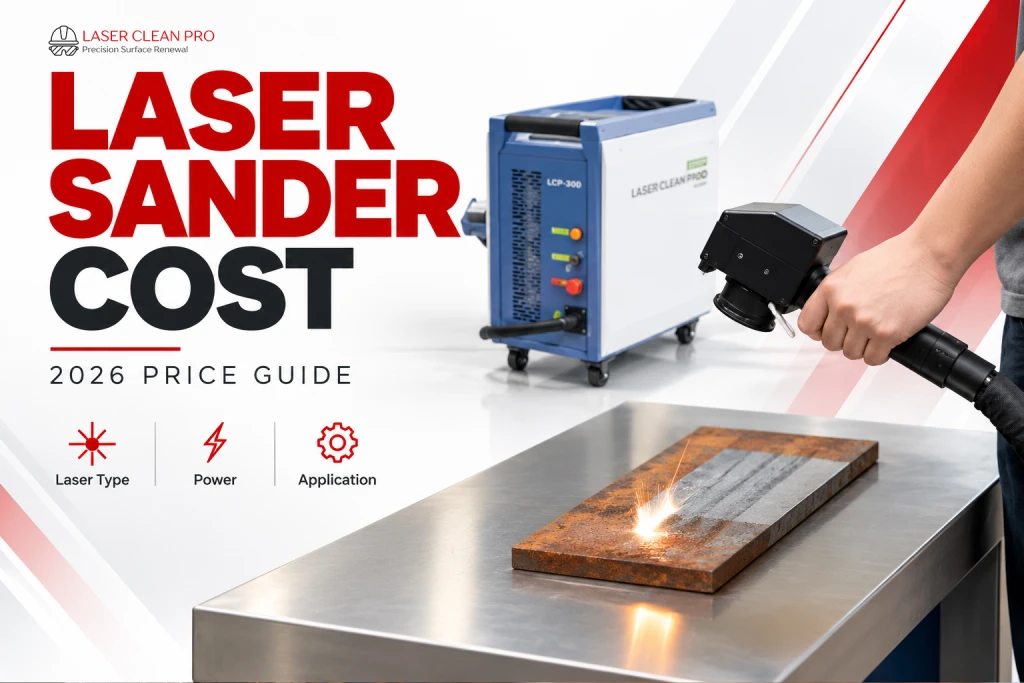
The cost of laser sander equipment depends on several factors, including laser type, power output, configuration, portability, and the applications the machine is expected to handle. Higher wattage does not always mean a higher price. Pulsed systems built for precision restoration work often cost more than higher-wattage continuous wave units designed for heavy rust removal.
This guide explains the primary factors that influence pricing, compares laser cleaning with sandblasting and chemical stripping, and outlines the key considerations to evaluate before purchasing. At Laser Clean Pro, every machine is quoted against its specific application, so pricing reflects the work you actually need done.
“Laser sander” is the term most buyers search for, but within the industry the equipment is known as a laser cleaning machine. Some suppliers also market it as a laser sanding machine. Despite the name, the process involves no sanding at all: no abrasive contact, no blasting media, and no chemical strippers.
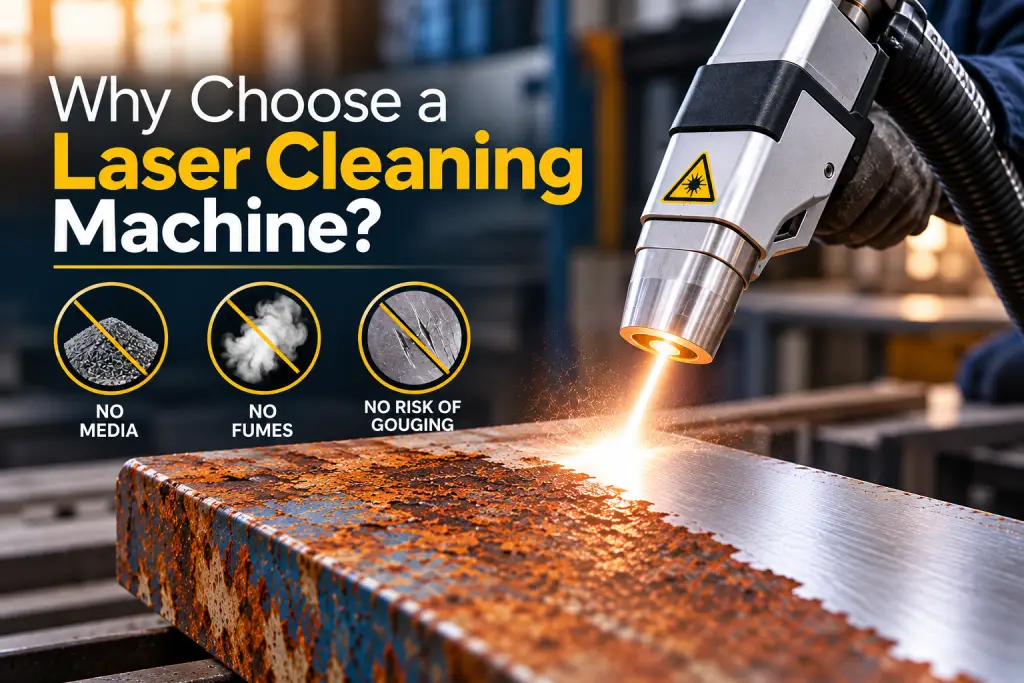
Instead, a focused laser beam delivers concentrated energy to rust, paint, oil, or coatings on the surface. That energy causes the contaminant to break down and lift away, a process known as laser ablation. Bare metal reflects much of the beam’s energy, so the contaminant is removed while the underlying substrate stays intact. Because nothing is propelled against the surface, there is no spent media to collect and far less secondary waste to manage.
Selecting the right machine begins with five details: the base material, the type of contaminant, the surface area to be cleaned, the level of precision required, and how often the machine will run. Light surface rust on a small restoration part and heavy corrosion on structural steel beams call for very different equipment, and very different price points.
Laser sander price varies widely because each machine is engineered for a different workload. A mobile restoration operator and a structural steel maintenance contractor have very different requirements for power, speed, and portability, and the equipment each needs is priced accordingly. The table below outlines the three general tiers of laser cleaning equipment, the typical power range of each, and the types of businesses each tier is best suited to serve. Use it as a starting point to identify where your workload is likely to fall. Keep in mind that power alone does not set the price. Pulsed lasers deliver precise, low-heat cleaning and typically cost more per watt than continuous wave systems, so a mid-power pulsed machine can be a larger investment than a higher-wattage continuous wave unit.
Pulsed machines in the 100W–300W range offer fine control and low heat input at a slower cleaning pace. They are well suited to classic car and motorcycle parts, small fabricated components, and paint removal on detailed or delicate surfaces where protecting the substrate matters more than speed.
The LCP-300P-L is a compact 300W pulsed system designed for mobile work. It is air-cooled and housed in a luggage-style case, so it needs no water chiller, sets up quickly, and is simple to transport. Operators who want a hand-held laser rust remover can take it to the customer’s site instead of hauling parts back to the workshop. It is also the most accessible entry point into pulsed laser cleaning, which makes it a practical first machine for businesses adding laser services.
Pulsed machines in the 500W–1000W range combine the precision of pulsed cleaning with substantially higher throughput. They handle moderate rust and coatings over larger areas, such as trailer frames, farm equipment, and batches of fabricated parts, without the heat input of a continuous wave system.
The LCP-500P-L and LCP-1000P-L suit service businesses with steady cleaning work that want to take on larger jobs. Like the entry-level model, both are air-cooled and fully mobile in a luggage-style case. This tier is the highest investment of the three, because high-power pulsed laser sources are costly to build. That investment makes sense when surface area, not customer demand, is what limits how many jobs you can complete in a day.
Continuous wave machines rated at 1500W and above are built for speed on heavy-duty work. They excel at removing thick rust and mill scale from structural steel components, preparing welds on high-volume fabrication lines, and cleaning other large surfaces where throughput matters more than fine detail.
The LCP-1500C-T is an air-cooled, facility-based continuous wave system. Because continuous wave laser sources cost less to produce than pulsed sources, it is the lowest investment of the three tiers despite having the highest power rating. The trade-off is heat. A continuous beam puts more heat into the surface, so it is not the right choice for thin sheet metal, delicate parts, or restoration work where the substrate must be protected. For those applications, a pulsed machine remains the better fit, even at a higher price.
Two machines with similar power ratings can differ significantly in price, and a lower-wattage machine can even cost more than a higher-wattage one. The difference comes down to three factors: the type of laser source, how the machine is configured for mobility and throughput, and what support is included with the purchase. Understanding each one makes it easier to compare quotes and to judge whether a higher price reflects capability you will actually use.
Laser type has the greatest influence on price, and it also determines what a machine does best.
Pulsed lasers fire in extremely short, high-energy bursts, which keeps heat input into the part low. That makes them well suited to restoration, thin sheet metal, molds, and other surfaces that need protecting. Producing those high-peak-power pulses requires a more complex and costly laser source, which is why pulsed machines carry a higher price per watt.
Continuous wave (CW) lasers run a steady, uninterrupted beam. They remove heavy rust and coatings quickly over large areas and cost considerably less per watt, but they put more heat into the surface and can discolor or warp thin material. A shop that handles both detailed restoration and heavy-duty work may find that one machine of each type serves its customers better than a single compromise.
How a machine is packaged and deployed also affects its price. A system built to travel between job sites needs a compact, durable enclosure, and air cooling eliminates the bulk of a separate water chiller, so the unit can be rolled into a customer’s facility and running within minutes. A facility-based machine, by contrast, can prioritize sustained output over portability.
On production lines, cleaning can be automated by mounting the laser head on a robot or gantry, so parts are treated consistently without a hand-held operator. Automation adds integration, fixturing, and programming costs, but for high-volume manufacturers it delivers repeatable results and frees operators for other work.
Some of the most important differences between machines never appear on a specification sheet. Before comparing prices, ask what each quote includes in these three areas:
Rust removal is where the differences between machines show most clearly. Light surface rust on classic car brackets, oxide along welds before painting, and heavy corrosion on structural steel each call for a different setup. The cost of laser sander equipment rises with the capacity the work demands.
Several variables shape the right specification:
Matching these factors to the right tier protects your investment. A shop restoring a few parts a week does not need production-level equipment, and a compact pulsed system such as the LCP-300P-L will serve it well. A facility removing heavy corrosion and mill scale from steel components every day needs the speed of a continuous wave system such as the LCP-1500C-T. The right laser sanding machine is the one that matches the work you plan to sell, not the one with the highest power rating.
Beyond the purchase price, each method adds its own costs to every job.
A blasting job that takes an hour to strip can need another hour of masking and cleanup. If that time can’t be billed, it comes off your margin. Laser cleaning removes most of that work in exchange for a higher upfront investment.
On large industrial projects, labor, containment, waste disposal and downtime can outweigh the equipment price. Compare the full cost of the work with each method. For thick coatings on large, rough surfaces, blasting or chemical stripping may still come out ahead.
Laser cleaning is a powerful tool, but it isn’t the right answer for every job. Planning for these limitations up front helps you set realistic expectations with customers and choose the right machine.
Before comparing models or requesting quotes, work out what a laser sanding machine will add to your business. These four questions help ground the decision in your actual work rather than in specifications alone.
Every Laser Clean Pro machine comes with start-up videos, settings guides and direct access to our team for questions. Laser Clean Pro also works with a financing partner to help spread the cost of your equipment.
Before you buy, you can book a one-on-one consultation with our team. We’ll share videos of our machines cleaning a range of surfaces. If you already know which materials and contaminants you work with, we’ll focus the conversation on those.
The purchase price is only the starting point. Running a laser sander adds ongoing costs that grow with job volume. Budgeting for them up front gives you a more accurate picture of what each job really costs.
Q1. How expensive is laser sanding?
It depends more on laser type than on power. Pulsed lasers cost more per watt, so our LCP-1500C-T continuous wave system is the lowest investment, the LCP-300P-L pulsed system is moderate, and the LCP-500P-L and LCP-1000P-L pulsed systems are the highest.
A higher upfront cost than basic blasting equipment, slower removal of thick coatings on lower-power machines, and the need for direct line of sight. Training, laser safety measures and sometimes fume extraction are also required.
Yes, when the machine is matched to the material, the contaminant and the level of cleaning required.
It depends on the metal, the rust or coating, the surface size, the precision required and your workload. Small restoration jobs suit a compact pulsed system, while heavy rust on structural steel calls for a continuous wave machine.
“Laser sander” is the common search term. “Laser cleaning machine” is the industry name for equipment that removes rust, paint and coatings by laser ablation, with no media, chemicals or actual sanding.
Whichever supplier you speak with, a clear picture of your work leads to a more accurate recommendation. Before comparing quotes, write down:
A supplier can use these details to recommend the right configuration and price it against your actual work. Send them to Laser Clean Pro with your quote request, and our team will match you with a machine that fits your workload. If you’d like to see how laser cleaning handles surfaces like yours, ask about a one-on-one consultation.